Categories
Nonfiction NYC Observations

East 77th Street.

I was standing on the south side of East 77th Street near York Avenue. It was late June and my first night living in New York City. Everything I owned—two bags full of clothes and shoes, travel-sized toiletries, two towels, a disassembled table, a bed, one pot, a laptop computer, and important documents—was in a pile on the sidewalk.

I hadn’t wanted to live that far from the hospital. The broker—tan, fit, and preoccupied—glanced at my documents[1. Formal brokers in New York City commonly want two pay stubs, your most recent tax return, and proof that you have a bank account before renting you an apartment.] and said, “You can’t afford to live near the hospital. But you could live on the Upper East Side. You could take the 6 or the M15 to work.”

Rents increased the closer the apartments were to the subway. I couldn’t afford anything beyond 1st Avenue.

My apartment was a “cozy” studio on the first floor. It was in a red brick tenement, built around 1940, that was four stories tall. White, vertical metal bars adorned the inside of the single window. Jutting out underneath was a rumbling window air conditioner.

There was also a small window in the bathroom that opened to a small, dark enclosure that was littered with cigarette butts and dented soda cans. When that window was open, the aromas of cooking food, the shouts and cursing of people watching football games, and the moaning of men and women having sex often floated in.

The kitchen had a two-burner stove, a miniature oven, and a short fridge. The sink was metal and shallow. There was no room for a table.

The main living space was just large enough for a full-sized bed and a small desk. I got the desk from the man I was dating. It was an old table, constructed of particle board, that he was going to throw out. The tabletop was white and visibly sagging; it resembled a hammock on four rusting legs. I eventually got a small bookshelf. To get to the window, I had to squeeze myself between the bookshelf and the foot of the bed.

The apartment was probably around 250 square feet. Rent was $1550 a month.

Before I learned that the heating pipe in the corner would often clang as the radiator overheated my apartment all winter, that, in this neighborhood, black women often pushed baby carriages holding white infants, that people would fish from the East River before 6am, that lights in the Empire State Building could change color, that up to 1000 people would pour out of Penn Station every 90 seconds[2. “… Penn Station, which is the busiest station in North America, funnelling 600,000 passengers through just 21 tracks, sometimes at the rate of 1,000 people every 90 seconds.”], that my then boyfriend and I would eventually get married in Central Park, before all that–

–I stood on the sidewalk on East 77th Street and looked around. People ignored me and walked around my pile of stuff. Yellow taxis, black Lincoln town cars, and men on bicycles delivering food rolled along York Avenue. Only a few stars dotted the indigo-charcoal sky.

I had a place to live, a new job that would start in a few days, and at least a year to learn about and live in New York City.

I grinned.


Categories
Nonfiction Observations

Information Wants to be Free.

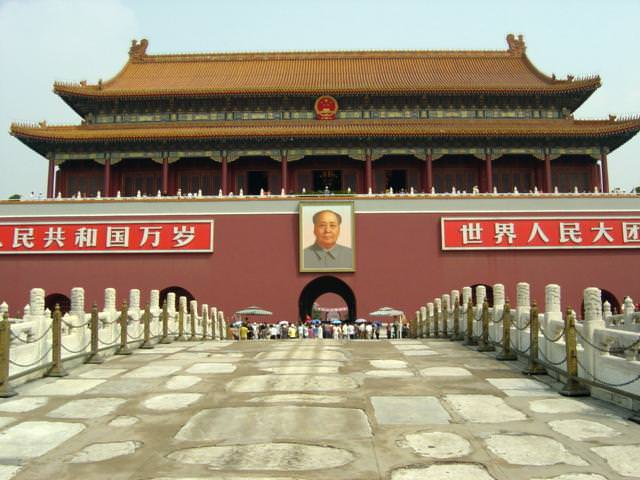
It was hot. No clouds were in the sky and the white concrete tiles underfoot radiated the solar heat. Chairman Mao gazed out his picture frame, his gigantic eyes watching over Tiananmen Square.

The tour guide was a woman in her late twenties. Her English had a moderate Chinese accent. She had difficulties pronouncing the letter “v”.

“Yes, it is wery hot today.”

On her tee shirt were English letters written in a loopy script: “Looking for love”. A small red heart, darker than the color of the flag of China, adorned the lower left corner.

I hastened to her side to ask her a question.

“Would you mind telling me about the government’s official statement about Tiananmen Square? Does anyone ever talk about what happened?”

“Well…” she murmured. She looked down, then pushed her hair out of her face. She had an angular jaw, wore large sunglasses, and walked quickly.

“… the tour company asks us not to discuss politics,” she said. “We’re not supposed to know anything about that[1. Compare an image search for “Tiananmen Square” on China’s main internet search engine, Baidu, and the same search on Google.].”

“Oh, oh, I’m sorry,” I hastily replied. “Forget I asked.” An unpolitic American I was, indeed.

She continued to walk ahead and I slowed down to turn to my husband.

“I can’t believe we’re here. What year was it when the protests happened?”

“I think it was—”

The tour guide turned around and blurted, “1989.”

He and I both looked at her, surprised. She looked at us, then quickly turned around and kept walking.


Categories
Lessons Nonfiction Observations

How to Respond to Problems.

Here’s another bit I dug out from my computer files. I had heard this from one of Marsha Linehan‘s post-doctoral students.


(Four) Options for Responding to Any Problem:

(1) Solve the problem. Leave, get out of the situation for good, or change the situation.

(2) Feel better about the problem. Regulate your emotional response to the problem.

(3) Tolerate the problem. Accept and tolerate both the problem and your response to the problem.

(4) Stay miserable.


What options did you choose today?

Categories
Nonfiction NYC Observations

Running Along the East River.

While organizing some files on my computer, I came across some of my old writings. The following was undated, but I suspect that I wrote it sometime during my first summer in New York City. I was living on the Upper East Side.

The first sentence of the piece describes the experience of running along the East River. The last sentence is still true.


The smells of salt water muck and car exhaust enveloped me. My nose crinkled involuntarily and I felt my diaphragm resist a full, deep breath: The air smelled noxious.

This will pass, I reminded myself. I had encountered into the same malodorous swirl during the first half of my run; Pig Pen’s cloud hadn’t accompanied me the entire way.

It was only 5:30am, but the temperature was already near 80 degrees. In addition to smelling like a polluted lake, the air was heavy and thick with moisture. I felt like I was breathing through a soggy, soiled wool sock. My running shirt and shorts, which had wicked sweat so effectively from my skin in Seattle, were now clinging to my damp skin like that last noodle lingering in the almost soupless bowl.

I was not sweating alone, though; other residents humans and dogs in New York were watching the sky alight with the morning sun. A few other runners plodded along; several couples walked hand in hand; cyclists sans helmets zipped past. Several individuals in various states of undress occupied benches. Some had slept there all night. Some were watching the sky, as if waiting for a celestial message.

Encouraging myself to actually smell the air, I took in a breath, timing my respirations with my footfalls. My eyes focused on a bench about thirty yards away: You can make it to that bench.

I had noticed him during the first half of my run. His arm was slung around the slender shoulders of the young woman leaning up against him.

Now, he had risen from the park bench, leaving his faceless sweetheart behind. I noticed him noticing me. He noticed me noticing him. I saw the impish smile form on his face.

When I passed him, he began to run and, within a few steps, was running alongside me. As he approached, I instinctively began to run faster out of alarm, though it was soon seemed that his intentions, though unclear, were probably not malicious.

(… though one never really knows for sure.)

“This is hard,” he commented in a Middle Eastern accent. His loose pant legs rustled against each other as he tried to maintain my pace.

“This is true,” I replied between breaths, playing along. A random stranger just started to run with me at 5:30am in New York City.

He smiled again and mumbled, “How do you do this?” before decelerating. He was soon walking and, presumably, returned to the park bench and the object of his previous affections.

I passed the bench that I had mentally marked earlier and selected the black gate that was about forty yards ahead.

I don’t know. Though I do know that none of this would have ever happened in Seattle.

Categories
Consult-Liaison Education Informal-curriculum Lessons Medicine Observations

Informal Curriculum: Lesson 5.

Another recommendation in the informal curriculum is to regularly acknowledge patient strengths.

Physicians are specifically trained to look for problems. The purpose of diagnosis is to identify what is wrong with a patient’s health. As a consequence, we spend a lot of time thinking and talking about what is ill, incorrect, out of order, defective. Our worldview can shift so that we overlook what is healthy, robust, flourishing, hopeful.

Patients, like all people, like to hear what they are doing well. None of us like the experience of receiving only negative feedback, particularly when we are doing the best that we can. Acknowledging patient strengths explicitly recognizes the contributions patients make towards improving their health. We want them to continue to do those beneficial things.

Physicians are in positions of authority and power. Taking the time to comment on what a patient is doing well can strengthen the relationship between patient and physician. Furthermore, this positive feedback can encourage patients to continue their efforts in improving or maintaining their health status. (Positive reinforcement[1. Positive reinforcement is an active intervention that increases the likelihood that a specific event will happen. Example: A woman wears an orange blouse to work. People tell her that the orange blouse looks great on her (intervention). As a result, she wears the blouse more often.] is often more effective than negative reinforcement[2. Negative reinforcement is the removal of something unpleasant that increases the likelihood that a specific event will happen. Example: A woman wears a green blouse to work. People incessantly whine that she looks better in an orange blouse. She wants the whining to stop (i.e. removal of something unpleasant). As a result, she might wear an orange blouse more often.] or punishment[3. Punishment is an active intervention that is meant to increase the likelihood that a behavior will stop. Example: A woman wears a green blouse to work. People spit at her because she is wearing that blouse. She learns not to wear the green blouse… but note that she does not know what the desired behavior is. Compare this with negative reinforcement.] in changing behavior.)

Acknowledging patient strengths need not be saccharine. Simple observations can serve as encouragement:

  • You’re checking your blood sugars regularly.
  • I see you’ve gotten out of bed three times already today.
  • You’re keeping a record of how much alcohol you’re drinking.

These observations may ostensibly appear neutral. However, patients know that doctors pay attention to those things that we find important. This attention is often highly valued currency. Patients may find themselves attending to and doing these desired behaviors more often as a result.

How often do you explicitly point out what people are doing well? Do you find yourself commenting more on problems?

  1. ”Tell me what you think helped keep your blood sugars within this healthy range on this day.” or “A lot of your blood sugars are too high.”
  2. ”You’ve helped your body recover by getting out of bed.” or “You should get out of bed more often.”
  3. ”What’s helped you limit your alcohol use to a bottle of wine on that night?” or “On most nights you’re still drinking two bottles of wine. This is a problem.”

Of course, there are occasions when we must discuss problems and focus on what is wrong. This is not a call to willfully disregard what is out of order. This is a reminder to balance what we say.

And lest these suggestions seem foolish, consider your own experiences with your supervisors. We like it when people recognize and praise the work that we do. It’s a drag when we only hear about our lack of productivity, patient complaints, or the urgency to discharge patients from the hospital. Most people want recognition and encouragement for their efforts.

Patients are no different.