Categories
Education Lessons Medicine Nonfiction Observations

An Open Letter to All the Patients I Have Ever Cared For.

Originally written during my second year of residency. Now that I am an attending, I believe more than ever that patients “are our best and most effective teachers”.


Dear Patient(s),

Thank you for educating me.

Thank you for letting me shine bright lights into your eyes and place Q-tips up your nose. Thank you for not shooting me a dirty look when I ask you to lift up your pendulous breast so I can listen to your heart. Thank you for letting me ogle at your protuberant belly—whether it contains a baby, a liver tumor, or liters of fluid inside. Thank you for not experiencing an erection and for refraining from snide remarks when I examine your penis. Thank you for telling me that my speculum use is suboptimal and has caused you pain during your pelvic exam. Thank you for nearly kicking me in the face when I tap on your knees to test your reflexes. Thank you for peeing all over me after I remove your diaper.

Thank you for answering questions that, in any other context, are completely obnoxious and rude. Thank you for being honest with me when I ask if you are a prostitute, an IV drug user, or an alcoholic. Thank you for not assaulting me when I ask if you have sex with “men, women, or both”. Thank you for answering questions about hearing loss when you’re actually concerned about your chest pain. Thank you for not yelling at me in impatience when your back pain is “a ten out of ten”.

Thank you for telling me that it doesn’t seem like I am taking that symptom seriously. Thank you for not masking your facial expressions and allowing your face to contort in offense when I phrase a question or statement poorly. Thank you for saying “OW” when I do something that causes you pain. Thank you for screaming in my face for the duration of our time together after I look into your ears.

Thank you for letting me wake you up at 4:30am for the sole purpose of allowing me to examine your belly wound. Thank you for letting me wake you up at 8:30am, a mere ten minutes after you fell asleep after being up all night and writhing in agony in the ER. Thank you for asking me if I could get your a cup of water or ice chips. Thank you for reminding me that your thirst matters more to you right now than the fact that your potassium level is uncomfortably low.

Thank you for apologizing when you throw up all over yourself—not that you should, but your mindfulness in that moment illuminates a strength that you have that I don’t know that I would have in that moment. Thank you for crying in front of me. Thank you for sharing your deepest fears with me. Thank you for asking me to leave so you can spend time with your family, all of whom are devastated with your prognosis. Thank you for asking me to sit with you. Thank you for asking me to listen. Thank you for reminding me that sometimes, being present with patients is more important than writing for another antibiotic.

Thank you for answering questions that you have already answered for five other people. Thank you for not yelling at me when I ask the same question twice in the same interview. Thank you for refraining from comments like “You’re totally imcompetent” when attending physicians have brought up a diagnostic or therapeutic possibility that I had completely overlooked (or just did not know). Thank you for not spitting in my face when all I seem to say is “I don’t know”. Thank you for not throwing things at me while I nod off when the attending physician is speaking to you.

Thank you for telling me that you have thought about killing another person. Thank you for your attempts at pushing my buttons, whether it be through questioning my technical knowledge, academic status, or medical specialty. Thank you for sneering at me.

Thank you for calling me “doctor” when I don’t feel like one at all. Thank you for saying “thank you” when you’re getting better—in spite of me, not because of me. Thank you for poking fun at me for the express purpose of making me laugh. Thank you for giving me a hug before you leave the hospital. Thank you for smiling at me.

Medical school and residency training involves a lot of reading, tests, and studying. But the truth is, you are our best and most effective teachers. And for that, I thank you.

Sincerely,
Maria

Categories
Nonfiction NYC Observations

Lunch.

During my first year in New York, I packed my lunches in plastic grocery bags from Morton Williams. That is where I purchased cartons of frozen Shop Rite veggies, picked through Cortland apples, saw packages for matzoh ball soup, and overheard elderly women bicker with cashiers over the price of the deli pasta salad.

My lunches were simple: thin sandwiches, leftover pasta and vegetables, string cheese, fruit, nuts. If I wanted a treat, I’d slip in a few cookies.

Upon sitting down at the round table in the office next to the large windows overlooking the East River, I unwrapped my lunch. Several of the attending psychiatrists showed great interest in my food.[1. I have never before nor since experienced so much fascination from others about my lunches.]

“So… what did Dr. Yang bring for lunch today?

“What homemade goodness are you having?”

Sometimes they stood over me; sometimes they pulled a chair out and sat down, leaning forward to inspect the contents of my lunch.

“What’s in that? Eggplants? Tomatoes? I smell garlic.”

“What kind of apple is that?”

“Leftover pizza, right?”

As I confirmed or otherwise explained the ingredients in my lunch, sometimes they congratulated each other for their discernment. I nodded and resumed eating. They wandered away towards the door.

“So… diner?”

“It’ll be crowded. How about the cart out front?”

“The diner is always crowded, but they make good fries.”

“Okay, the diner it is.”

The team nurse often entered the office after the psychiatrists had left. She spoke with a Brooklyn accent, dressed with class, and carried herself with confidence. Though the wrinkles around her eyes and on her hands revealed her age, she argued with vigor when she disagreed with the director of the service. He would persist, though knew to relent: She was a strong woman.

Sometimes, upon finding me eating alone, she would sit down at the table. She shared history about the department, interesting developments in other parts of the hospital, and updates about patients I had seen.

She also shared her sadness about her son. He was killed while serving in the military a few years prior and the anniversary of his death had just passed. Though she was smiling, her eyes were already full of tears. Her voice cracked as she apologized for crying.

“I miss him so much,” she said, dabbing her eyes with a ball of tissue. As she pulled apart the ball, she murmured, “My mascara is starting to run, isn’t it.” More sad than annoyed, she motioned me to walk with her to her desk. Her computer wallpaper was a photo of her son in his military uniform.

She pulled out a compact and examined her eyes, wiping away the trails of diluted mascara on her cheeks. She was still crying.

The sky was dark. A storm was coming. The arcs of the grey clouds were descending upon the lines of the housing projects and warehouses across the river. Her screensaver began flashing photos of her dead son.

The office door opened; the psychiatrists were back from lunch. The nurse quickly wiped her nose and forced a smile.

“Time to get back to work,” she said, standing up.


Categories
Nonfiction NYC Observations

East 77th Street.

I was standing on the south side of East 77th Street near York Avenue. It was late June and my first night living in New York City. Everything I owned—two bags full of clothes and shoes, travel-sized toiletries, two towels, a disassembled table, a bed, one pot, a laptop computer, and important documents—was in a pile on the sidewalk.

I hadn’t wanted to live that far from the hospital. The broker—tan, fit, and preoccupied—glanced at my documents[1. Formal brokers in New York City commonly want two pay stubs, your most recent tax return, and proof that you have a bank account before renting you an apartment.] and said, “You can’t afford to live near the hospital. But you could live on the Upper East Side. You could take the 6 or the M15 to work.”

Rents increased the closer the apartments were to the subway. I couldn’t afford anything beyond 1st Avenue.

My apartment was a “cozy” studio on the first floor. It was in a red brick tenement, built around 1940, that was four stories tall. White, vertical metal bars adorned the inside of the single window. Jutting out underneath was a rumbling window air conditioner.

There was also a small window in the bathroom that opened to a small, dark enclosure that was littered with cigarette butts and dented soda cans. When that window was open, the aromas of cooking food, the shouts and cursing of people watching football games, and the moaning of men and women having sex often floated in.

The kitchen had a two-burner stove, a miniature oven, and a short fridge. The sink was metal and shallow. There was no room for a table.

The main living space was just large enough for a full-sized bed and a small desk. I got the desk from the man I was dating. It was an old table, constructed of particle board, that he was going to throw out. The tabletop was white and visibly sagging; it resembled a hammock on four rusting legs. I eventually got a small bookshelf. To get to the window, I had to squeeze myself between the bookshelf and the foot of the bed.

The apartment was probably around 250 square feet. Rent was $1550 a month.

Before I learned that the heating pipe in the corner would often clang as the radiator overheated my apartment all winter, that, in this neighborhood, black women often pushed baby carriages holding white infants, that people would fish from the East River before 6am, that lights in the Empire State Building could change color, that up to 1000 people would pour out of Penn Station every 90 seconds[2. “… Penn Station, which is the busiest station in North America, funnelling 600,000 passengers through just 21 tracks, sometimes at the rate of 1,000 people every 90 seconds.”], that my then boyfriend and I would eventually get married in Central Park, before all that–

–I stood on the sidewalk on East 77th Street and looked around. People ignored me and walked around my pile of stuff. Yellow taxis, black Lincoln town cars, and men on bicycles delivering food rolled along York Avenue. Only a few stars dotted the indigo-charcoal sky.

I had a place to live, a new job that would start in a few days, and at least a year to learn about and live in New York City.

I grinned.


Categories
Nonfiction Observations

Information Wants to be Free.

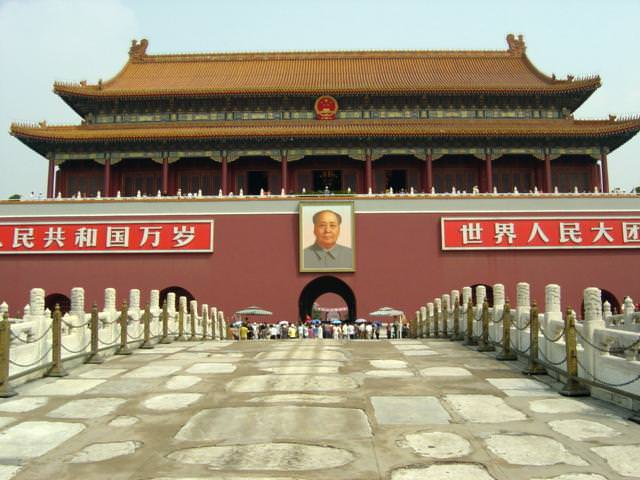
It was hot. No clouds were in the sky and the white concrete tiles underfoot radiated the solar heat. Chairman Mao gazed out his picture frame, his gigantic eyes watching over Tiananmen Square.

The tour guide was a woman in her late twenties. Her English had a moderate Chinese accent. She had difficulties pronouncing the letter “v”.

“Yes, it is wery hot today.”

On her tee shirt were English letters written in a loopy script: “Looking for love”. A small red heart, darker than the color of the flag of China, adorned the lower left corner.

I hastened to her side to ask her a question.

“Would you mind telling me about the government’s official statement about Tiananmen Square? Does anyone ever talk about what happened?”

“Well…” she murmured. She looked down, then pushed her hair out of her face. She had an angular jaw, wore large sunglasses, and walked quickly.

“… the tour company asks us not to discuss politics,” she said. “We’re not supposed to know anything about that[1. Compare an image search for “Tiananmen Square” on China’s main internet search engine, Baidu, and the same search on Google.].”

“Oh, oh, I’m sorry,” I hastily replied. “Forget I asked.” An unpolitic American I was, indeed.

She continued to walk ahead and I slowed down to turn to my husband.

“I can’t believe we’re here. What year was it when the protests happened?”

“I think it was—”

The tour guide turned around and blurted, “1989.”

He and I both looked at her, surprised. She looked at us, then quickly turned around and kept walking.


Categories
Lessons Nonfiction Observations

How to Respond to Problems.

Here’s another bit I dug out from my computer files. I had heard this from one of Marsha Linehan‘s post-doctoral students.


(Four) Options for Responding to Any Problem:

(1) Solve the problem. Leave, get out of the situation for good, or change the situation.

(2) Feel better about the problem. Regulate your emotional response to the problem.

(3) Tolerate the problem. Accept and tolerate both the problem and your response to the problem.

(4) Stay miserable.


What options did you choose today?