A belated winter gift for readers: Here are some articles and other media I have found useful and interesting in the past few months, which you may enjoy, too.
Still Processing. This is a podcast from the New York Times. “Wesley Morris and J Wortham are working it out in this show about culture. That means television, film, books, music — but also the culture of work, dating, the internet and how those fit together.” Wesley Morris is a superb writer, too, and has the Pulitzer Prizes—plural! 2012 and 2021!—to prove it.
Lucas Sin. He is a chef who is from Hong Kong and now works in New York. He seems thoughtful, communicates well, and has an understated enthusiasm for his craft.
Mystery Menu. Sohla and Ham are both chefs. Not only do they have expertise in creating dishes from strange ingredients, but they also seem like delightful people.
Building Resilient Organizations. Maurice Mitchell’s analysis of dynamics in progressive organizations is intelligent, incisive, and inspiring. (There are similarities with ideas in John McWhorter‘s writings. I learned about Mr. Mitchell through Chris Hayes.)
Escaping American tribalism: Only personal bravery can end polarisation. William Deresiewicz, like other writers I admire, shares sharp, provocative opinions and insights (“You change your mind when you consent to stop ignoring things you know full well but do not want to think about”). I look forward to reading his most recent book, The End of Solitude: Selected Essays on Culture and Society.
Glass Onion: A Knives Out Mystery. As someone who has read nearly all of Agatha Christie’s novels, it is delightful to see Hercule Poirot reincarnated as Benoit Blanc. It’s a fun movie. (And Edward Norton and Janelle Monáe make such gorgeous eye candy!)
A few questions I have asked ChatGPT, the artificial intelligence chatbot:
“Is the journalist Chris Hayes actually a donut?”
For reasons that make sense to no one except for me, Chris Hayes‘s face reminds me of a donut: round, smooth, and fluffy. (Maybe this is just an inappropriate way to comment that he has nice skin?) I appreciate that ChatGPT not only wonders why I think he is a pastry, but also makes it clear that Chris Hayes is not a donut.
“Which is better: left turns or pizza?”
ChatGPT has no patience for my foolishness, though graciously explains that left turns and pizza are categorically different things. I appreciate ChatGPT deferring to my personal preferences and experiences. (If I had to choose for only one to exist, I think I would choose pizza. Three right turns make a left turn, but other flatbreads are not pizza.)
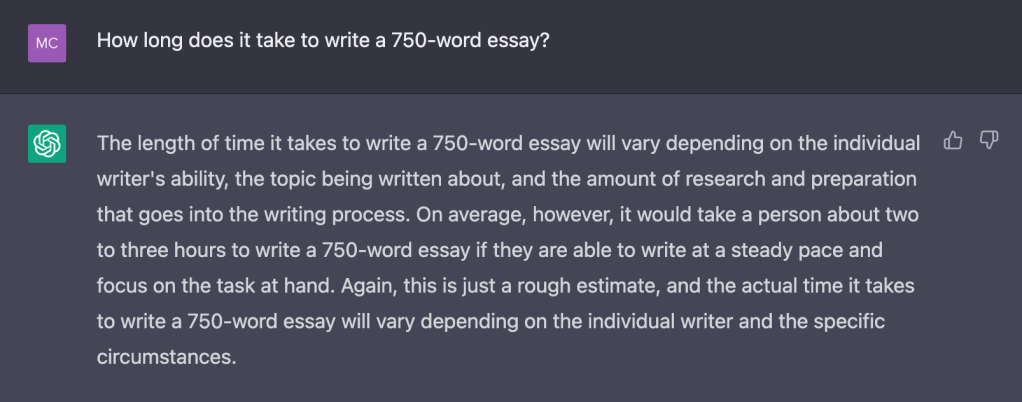
“How long does it take to write a 750-word essay?”
I found this response validating. I have wondered if I’m just slow, as it often takes me a few hours to write a post for publication here. Those few hours of writing transform into a mere three minutes of reading!
And that, dear reader, is how I have “cheated” in generating this week’s blog post.
(I know it’s the holiday season and I promise I’m not actually a grinch, but here’s your warning: This is going to be kind of a bummer of a post.)
Some recent scenes for your consideration:
The sliding wooden gate did nothing to dampen the sounds of traffic on the boulevard. Inside the wooden gate was a parking lot that was now occupied by around 40 small sheds, each painted a different color. At one end was an open-air shared kitchen and a set of small bathrooms. It was snowing, the kind of wet, clumpy snow that doesn’t stick, but instead seeps immediately into clothes, hats, and sleeping bags. Though people in this “village” are still technically homeless, they were at least protected from this unusual Seattle weather. Within a few minutes of my arrival, a skinny kid, maybe eight or nine years old, wearing a sweater, shorts, and sandals, ambled outside alone to look up at the sky. Later, another skinny kid, maybe thirteen or fourteen, came out, his hands shoved into the pockets of his sweatpants and his eyes fixed on the ground. I wondered what their ACEs scores were and hoped that, as adults, they would escape and remain out of homelessness.
As I threaded my way through the city and the morning chill, I kept a mental tally: One man wearing a tank top and making grand gestures at the sky; another shirtless man pacing in tight circles; one woman wearing a soiled hoodie, with either black ink or a black substance smeared across the bottom half of her face, picking up trash from water pooled in the gutter; a man hobbling with a cane and screaming a melody; a man emerging from a collapsed tent to fold up a crinkled black tarp; a woman with bare legs and swaths of bright green caked on her eyelids who, in slurred speech, offered me a wristwatch dangling from her fingers.
“We have burned down the house of mental health in this city, and the people you see on the street are the survivors who staggered from the ashes,” writes Anthony Almojera, an N.Y.C. Paramedic [who has] Never Witnessed a Mental Health Crisis Like This One, who also comments that “there’s a serious post-pandemic mental health crisis.”
Maybe my expectations about the pandemic response were too high. A pandemic is an act of God; what could mankind possibly do that can deter the power of God?
I do believe that hope is a discipline. It’s hard to practice every day. But this is why I still question whether my expectations were too high. God spared us—you, dear reader, and me—during this pandemic. For what reason? What can and should we do with the gifts of our lives?
In trying to think through this myself, I turn to two mental models: First, what problem are “we” trying to solve? Second, can health care ethics provide guidance here?
What problem are “we” trying to solve? This requires reading the mind of New York City Mayor Eric Adams, which I cannot do. He has argued that The Royal We have a “moral obligation” to solve the problem of “assist[ing] those who are suffering from mental illness”. If we take him at his word, then we can fold his argument within the framework of medical ethics.
If, however, Mayor Adams is trying to solve a different problem (e.g., make homelessness invisible; reduce the number of complaints from the public about people exhibiting unusual or dangerous behaviors; demonstrate that he is “doing something” about homelessness, etc.), then the framework of medical ethics may not apply. If he is trying to solve a different problem, then instead of assisting those who suffer from mental illness, he is using those who suffer from mental illness to assist him and his actual agenda.
Of course, he may be trying to solve multiple problems through the guise of only one.
Can health care (or medical) ethics provide guidance here? One model used in medical ethics is called the four box model. Of note, the four boxes focuses on individual patients, not on populations of people.
Medical Indications (Beneficence and Nonmaleficence)
Patient Preferences (Respect for Autonomy)
Quality of Life (Beneficence, Nonmaleficence, and Respect for Autonomy)
Contextual Features (Justice and Fairness)
Medical indications asks what benefits and harms the patient might experience from interventions. Would involuntary psychiatric hospitalization help people with mental illness who are homeless? Some of them, yes. Would it help all of them? Maybe, maybe not. Could involuntary psychiatric hospitalization cause harm? That is not the intention, but sometimes it does. For reasons valid and invalid, it might discourage people from engaging in psychiatric services ever again. Anything involuntary always involves some degree of coercion, which people generally dislike.
Just because people are behaving in unusual ways and are living outside does not mean that psychiatric hospitalization is guaranteed to “fix” them. I do not mean to diminish the care people receive in psychiatric hospitals. People often need more than involuntary psychiatric hospitalization to get and stay well. Sometimes there is no medical indication for psychiatric hospitalization (involuntary or otherwise) for people with mental illness who are experiencing homelessness. Sometimes they just need a stable place to live.
Patient preferences refers to the dignity and choices people should have in living their lives. Some people would rather take pills by mouth every day than receive a monthly injection of medicine. Some people would prefer not to take any medicine at all. Patient preferences matter.
Some people who are living outside and behaving in unusual ways may not want to be in a hospital. Or maybe they are willing to be in a hospital, but not at that moment—maybe they have other things to take care of that day. Or maybe they are only willing to go to certain hospitals on their own, not at the behest of law enforcement. By definition, involuntary removal of people from the streets disregards patient preferences. Options other than psychiatric hospitalization, such as crisis centers, partial hospital programs, or day programs, can help preserve patient preferences and hence their dignity.
Quality of life describes the patient’s quality of life. Interventions should provide benefit, minimize harm, and maximize the dignity and choices of patients. This does not refer to the quality of life of the general public. If involuntary removal and psychiatric hospitalization are the means to the end of improved quality of life, how can these improvements be sustained following hospitalization?
It is absolutely true that psychiatric hospitalization can be life-saving and life-improving. However, people need and benefit from ongoing care and services following hospitalization. Mayor Adams’s target population also need places to live to maintain their gains. If you’ve ever been hospitalized for any reason, can you imagine the course of your recovery if you had no place to go upon leaving the hospital? How are you supposed to rest when you don’t know where you will sleep that night? Quality of life requires planning and sustained care; acute interventions alone rarely produce improvements in quality of life.
Contextual features are the intersections of a patient’s care with the rest of the world. There are a multitude of contextual features in Mayor Adams’s plan (and it makes me wonder if the mayor consulted with any partners prior to making his announcement). Here are a smattering of contextual features that come to my mind:
How will first responders decide if someone has a mental illness? What if they think someone has an “attitude problem” and instead refers them to jail? How severe do psychiatric symptoms have to be? Will only those who attract the attention of law enforcement be involuntarily removed? (What about the elderly woman who keeps to herself and has been homeless for decades and won’t move indoors because the voices tell her that she will die if she does?)
How will hospital psychiatrists react to people who, in their professional opinion, do not need hospital-level care, though the law argues otherwise? Will psychiatrists become agents of social control on behalf of the jurisdiction? There are some parallels here to the overturning of Roe v. Wade: Some gynecologists are not performing abortions, even though there are medical indications to do so, because of the law. Here, psychiatrists may proceed with involuntary treatment even though there are no medical indications to do so… because of the law.
Let’s say someone experiencing homelessness is involuntarily removed from the street and is psychiatrically hospitalized. Where will they go upon discharge? What if they prefer returning to the street instead of a shelter? What if they have no sources of income and there is insufficient affordable housing? (This is not actually a “what if” question.)
What about all the people who are homeless, but do not demonstrate symptoms of mental illness? Are there any opportunities to prevent or reduce the chances of mental illness in this population? (Yes, by increasing access to stable housing.)
What about all the people with severe mental illness who are not homeless? Are there any opportunities to prevent or reduce the chances of homelessness in this population? (Yes, by increasing access to and flexibility of psychiatric services.)
The four box model here highlights some ethical problems with Mayor Adams’s plan, though there are solutions to increase beneficence, autonomy, and justice while reducing non-maleficence. My hope is that Mayor Adams and leaders of other jurisdictions with similar ideas will take heed.
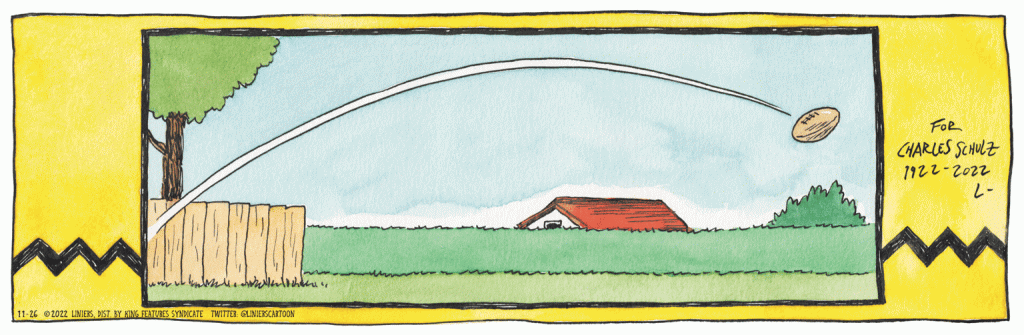
Happy 100th Birthday Charles M. “Sparky” Schulz! Charles Schulz was the creator of the world-renowned Peanuts comic strip. In honor of the centennial of his birth, many cartoonists created a comic strip for this weekend. You can view the tributes here. (Some side comments: As most people read newspapers online now, are there far fewer readers of newspaper comic strips now? I used to read the Sunday funnies throughout my youth; I recognize few of the cartoonists on that tribute page. My favorite strips included Peanuts, Calvin and Hobbes, Non Sequitur, and The Boondocks. For anyone who has even a mild interest in Peanuts, I highly recommend a visit to the Charles M. Schulz Museum in Santa Rosa, California. There are fun exhibits, thousands of comic strips on display, and interesting history about Mr. Schulz.)
Egg Drop from Space. I am one of the millions of subscribers to Mark Rober’s YouTube channel. His most recent video, Egg Drop from Space, is compelling because he shares his major failures in this project. Perhaps he knew that this would make for great storytelling, though he did not have to be this honest and share so many vulnerabilities. (I also completely missed that he was, in essence, trying to design a guided missile.) This isn’t the first time he has brought up failure in his videos, though the extents of his failures make him relatable and his resulting persistence is inspiring. I continue to hope that people will be willing to share their failures, since we’ve all experienced them and will continue to do so. (In that vein, in 2016 I shared a post about My CV of Failures. The formatting is weird because I am unable to use a WordPress footnotes plugin now that I was able to use then.)
“Personal Knowledge Management.” Though I’ve had an interest in technology for much of my life, I would not describe myself as someone who is technologically savvy. There are technologies I routinely use, though I have not uncovered their (or my) full potential. One tool that I have used for several months now is Logseq, which has the accurate description of being a “privacy-first, open-source knowledge base”. (I had dabbled in Obsidian—which I learned about as a loyal Dynalist user for several years—for a while, though personally find Logseq to be more powerful and flexible. As I get older, my appreciation for open-source projects has also grown… though I understand essentially nothing about or in Github.) I’ve not used Notion or Roam Research, but have used Notational Velocity and Tiddlywiki, which are similar “knowledge bases”. If you have used these programs in the past (or even if you haven’t), consider trying Logseq (not a paid endorsement, just someone who is at or near the peak of Mt. Stupid).





 Maria Yang, MD