The reason behind my recent silence here is I am attending to a beloved family member whose health continues to deteriorate. Surely other medical professionals have written about the difficulties of our roles and responsibilities: We are not (and should not be!) doctors or nurses for the ones we love, though it is difficult to push the professional knowledge out of our minds. Sometimes (often?) it doesn’t feel like love is enough, even as we realize that our professional knowledge isn’t enough, either.
I have spent most of my career working with people experiencing homelessness. I don’t recall newspapers and other media writing about this topic as much as they do now:
Homelessness is a federal problem. Was there ever a time when the feds tried to solve the problem of people having no place to live? What is the history of homelessness in the US?
Well, there’s actually a FREE, short paper (it’s an appendix!) from a long report about permanent supportive housing with the title “The History of Homelessness in the United States“. That article led me to the book Down and Out, On the Road: The Homeless in American History. I’m about 80 pages in and, so far, it’s not encouraging. The arguments and opinions about homelessness from 100 and 200 years ago are similar to what we hear now in 2023 (deserving vs. undeserving poor, work tests, etc.). I’m hoping the author will describe the intersections of homelessness (“vagrancy”) and health, including substance use (alcohol? opium?) and mental illness.
If this problem were easy to solve, we would have already solved it… right?
The inimitable Ed Yong is leaving The Atlantic! His stellar writing about Covid over the past three years were invaluable to me: Not only did he provide meaningful analysis about how Covid was affecting individuals and populations, but he also accurately captured the horror of what was happening.
In his recent newsletter, he shared the following:
… I want to double down on my journalistic values: not only describing what is happening but helping people actually make sense of it; bearing witness to suffering; speaking truth to power; revealing wonder in the obscure; and pushing for a more just and equitable world.
He has succeeded in adhering to his values (and received a well-deserved Pulitzer along the way). This has prompted me to consider what values I hold in my writing. (Are the values I hold in my professional role transferrable to my writing? Is writing part of my professional role? Why am I mincing my life into roles when they are interconnected, as per the first paragraph of this post?)
If you’ve seen the Barbie movie: I know most people are fawning over the song “I’m Just Ken”, but “Push” is the underrated gem. I’ll never hear the word “granted” the same way again.
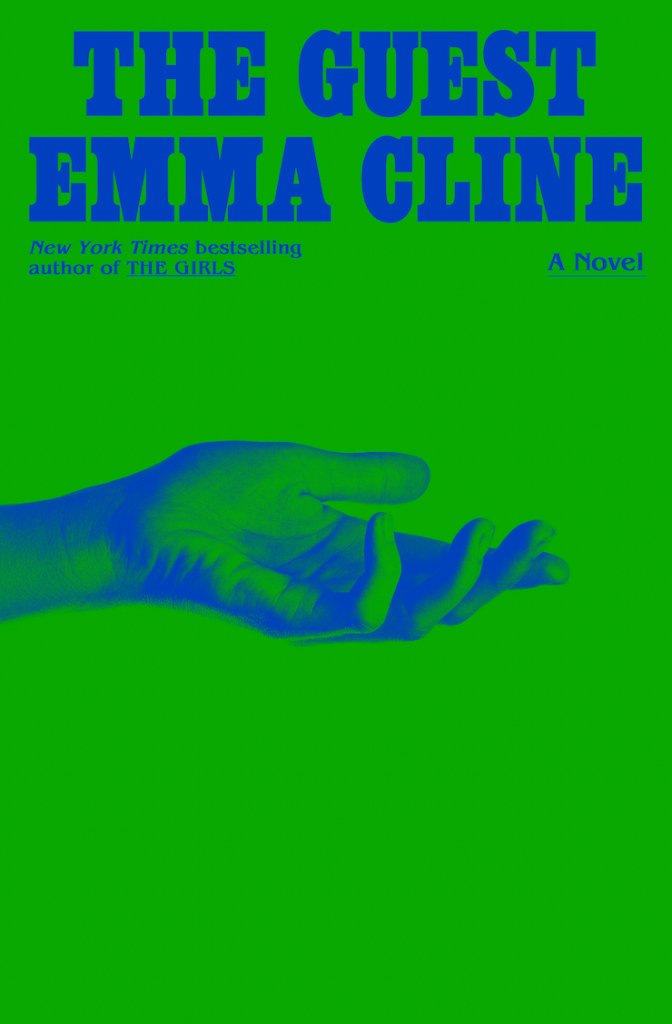
Inspired by this tweet (“This book is viscerally upsetting, lol. What the fuck”), I read The Guest by Emma Cline.
The inside flap offers an accurate description of the story: Alex makes a “misstep at a dinner party” and ends up wandering around Long Island. She has “few resources and a waterlogged phone, but [is] gifted with an ability to navigate the desires of others.” She is indeed “propelled by desperation and a mutable sense of morality” and “a cipher leaving destruction in her wake.”
And, yes, the book is viscerally upsetting.
Is the story about status and hierarchies? Yes. Is it about appearances and identity? Yes. Is it about the transactional roles young women play in American society? Yes.
Is it about a young woman who has nowhere to live? Yes: Alex is homeless.
This is not the reason why I chose to read this book. (Honestly, the only thing I knew about the book was from that tweet. We can wonder together why I wanted to read something “viscerally upsetting”).
It’s not Alex’s status as a homeless person that turns the stomach. (I don’t even know how many readers use the frame of homelessness while reading this story.) It’s the odious nature of her choices, how unsettling her behavior is. She is not endearing. (Kudos to Cline for creating a character who is unlikeable yet compelling.) We readers get caught up in the appearances of luxury and decadence that we forget that Alex is trying to find a stable place to live.
We never learn Alex’s backstory; we don’t know where she is from, what happened to her in the more distant past, or how she came to behave this way. Part of the point of the novel, I think, is that we can never know: Appearances are what matter. You can tell any story you want to get your needs met.
For readers who want to make their lives more difficult (…), this book introduces uncomfortable questions related to homelessness:
If a young woman is despicable, does she deserve to be homeless?
What do we want to happen to young women we don’t like? Do we want them to suffer? Is homelessness a sufficient punishment?
Do we therefore assume that all people who are homeless must have done terrible things?
Then there’s the question of redemption. The events of The Guest unfold over the course of one week. Do we think Alex could ever redeem herself? What if it takes a year? or five?
Should people who are unlikeable be homeless until they redeem themselves?
Maybe Alex is a cipher, but, more importantly, she has no place to live. That’s why she’s “propelled by desperation and a mutable sense of morality”. Perhaps we take comfort in the idea that Alex is a character, that this is a novel.
Would we make similar choices if we were in Alex’s situation?
Could we also do such unlikeable things if we were homeless?
What if the homeless young women we encounter aren’t anything like Alex? Might we want to make different choices ourselves?
(And, yes, to be clear, I do recommend The Guest.)
I gave the presentation earlier this week and ended up presenting (a) homelessnessdata specific to Seattle-King County, (b) general data in in published research about rates of different psychiatric conditions in people experiencing homelessness (there’s actually not a lot of data about this; my understanding is that there is a national study underway right now to assess people experiencing homelessness through structured psychiatric interviews), and (c) the topic of “Involuntarily Removing Mentally Ill People from Streets“. I asked the group—students within various health professions schools—for their thoughts about New York City’s plan.
Many of the students were unfamiliar with involuntary detention for psychiatric reasons, along with the process for how that happens (the laws in Washington State differ from those in most other states in the nation; namely, physicians and other mental health professionals in Washington State cannot detain people directly; we must call a third party, called Designated Crisis Responders, and refer someone for detention). The initial group consensus favored civil liberties; they spoke of loss of dignity, the psychological and physical trauma that can result from involuntary detention, and the importance of autonomy.
When the scenario was adjusted so that the person who was experiencing homelessness and major psychiatric symptoms was someone that the students knew and loved, they quickly changed their arguments to support involuntary detention. When we love someone, we are more comfortable taking away their rights.
Like many complex issues, “right” answers escape us as more facets of the problem are illuminated. Involuntary detention itself is a complicated issue and, because most people are not experiencing homelessness, the majority of people who are detained are people who have an indoor place they call home.
Some research indicates that around 76% of people experiencing homelessness also have a psychiatric disorder, though the association is complex and likely goes in both directions: Some people have a psychiatric condition that contributes to poverty and then homelessness (e.g., losing a job); others become homeless and then develop a psychiatric condition due to the challenges of not knowing where you will sleep at night.
I continue to learn the complexities of working at the intersections of poverty and mental health. I am grateful that more people are interested in this work, too. I hope that things don’t have to get worse before we can offer better help and care to these individuals, who are ultimately our neighbors.
(I know it’s the holiday season and I promise I’m not actually a grinch, but here’s your warning: This is going to be kind of a bummer of a post.)
Some recent scenes for your consideration:
The sliding wooden gate did nothing to dampen the sounds of traffic on the boulevard. Inside the wooden gate was a parking lot that was now occupied by around 40 small sheds, each painted a different color. At one end was an open-air shared kitchen and a set of small bathrooms. It was snowing, the kind of wet, clumpy snow that doesn’t stick, but instead seeps immediately into clothes, hats, and sleeping bags. Though people in this “village” are still technically homeless, they were at least protected from this unusual Seattle weather. Within a few minutes of my arrival, a skinny kid, maybe eight or nine years old, wearing a sweater, shorts, and sandals, ambled outside alone to look up at the sky. Later, another skinny kid, maybe thirteen or fourteen, came out, his hands shoved into the pockets of his sweatpants and his eyes fixed on the ground. I wondered what their ACEs scores were and hoped that, as adults, they would escape and remain out of homelessness.
As I threaded my way through the city and the morning chill, I kept a mental tally: One man wearing a tank top and making grand gestures at the sky; another shirtless man pacing in tight circles; one woman wearing a soiled hoodie, with either black ink or a black substance smeared across the bottom half of her face, picking up trash from water pooled in the gutter; a man hobbling with a cane and screaming a melody; a man emerging from a collapsed tent to fold up a crinkled black tarp; a woman with bare legs and swaths of bright green caked on her eyelids who, in slurred speech, offered me a wristwatch dangling from her fingers.
“We have burned down the house of mental health in this city, and the people you see on the street are the survivors who staggered from the ashes,” writes Anthony Almojera, an N.Y.C. Paramedic [who has] Never Witnessed a Mental Health Crisis Like This One, who also comments that “there’s a serious post-pandemic mental health crisis.”
Maybe my expectations about the pandemic response were too high. A pandemic is an act of God; what could mankind possibly do that can deter the power of God?
I do believe that hope is a discipline. It’s hard to practice every day. But this is why I still question whether my expectations were too high. God spared us—you, dear reader, and me—during this pandemic. For what reason? What can and should we do with the gifts of our lives?
In trying to think through this myself, I turn to two mental models: First, what problem are “we” trying to solve? Second, can health care ethics provide guidance here?
What problem are “we” trying to solve? This requires reading the mind of New York City Mayor Eric Adams, which I cannot do. He has argued that The Royal We have a “moral obligation” to solve the problem of “assist[ing] those who are suffering from mental illness”. If we take him at his word, then we can fold his argument within the framework of medical ethics.
If, however, Mayor Adams is trying to solve a different problem (e.g., make homelessness invisible; reduce the number of complaints from the public about people exhibiting unusual or dangerous behaviors; demonstrate that he is “doing something” about homelessness, etc.), then the framework of medical ethics may not apply. If he is trying to solve a different problem, then instead of assisting those who suffer from mental illness, he is using those who suffer from mental illness to assist him and his actual agenda.
Of course, he may be trying to solve multiple problems through the guise of only one.
Can health care (or medical) ethics provide guidance here? One model used in medical ethics is called the four box model. Of note, the four boxes focuses on individual patients, not on populations of people.
Medical Indications (Beneficence and Nonmaleficence)
Patient Preferences (Respect for Autonomy)
Quality of Life (Beneficence, Nonmaleficence, and Respect for Autonomy)
Contextual Features (Justice and Fairness)
Medical indications asks what benefits and harms the patient might experience from interventions. Would involuntary psychiatric hospitalization help people with mental illness who are homeless? Some of them, yes. Would it help all of them? Maybe, maybe not. Could involuntary psychiatric hospitalization cause harm? That is not the intention, but sometimes it does. For reasons valid and invalid, it might discourage people from engaging in psychiatric services ever again. Anything involuntary always involves some degree of coercion, which people generally dislike.
Just because people are behaving in unusual ways and are living outside does not mean that psychiatric hospitalization is guaranteed to “fix” them. I do not mean to diminish the care people receive in psychiatric hospitals. People often need more than involuntary psychiatric hospitalization to get and stay well. Sometimes there is no medical indication for psychiatric hospitalization (involuntary or otherwise) for people with mental illness who are experiencing homelessness. Sometimes they just need a stable place to live.
Patient preferences refers to the dignity and choices people should have in living their lives. Some people would rather take pills by mouth every day than receive a monthly injection of medicine. Some people would prefer not to take any medicine at all. Patient preferences matter.
Some people who are living outside and behaving in unusual ways may not want to be in a hospital. Or maybe they are willing to be in a hospital, but not at that moment—maybe they have other things to take care of that day. Or maybe they are only willing to go to certain hospitals on their own, not at the behest of law enforcement. By definition, involuntary removal of people from the streets disregards patient preferences. Options other than psychiatric hospitalization, such as crisis centers, partial hospital programs, or day programs, can help preserve patient preferences and hence their dignity.
Quality of life describes the patient’s quality of life. Interventions should provide benefit, minimize harm, and maximize the dignity and choices of patients. This does not refer to the quality of life of the general public. If involuntary removal and psychiatric hospitalization are the means to the end of improved quality of life, how can these improvements be sustained following hospitalization?
It is absolutely true that psychiatric hospitalization can be life-saving and life-improving. However, people need and benefit from ongoing care and services following hospitalization. Mayor Adams’s target population also need places to live to maintain their gains. If you’ve ever been hospitalized for any reason, can you imagine the course of your recovery if you had no place to go upon leaving the hospital? How are you supposed to rest when you don’t know where you will sleep that night? Quality of life requires planning and sustained care; acute interventions alone rarely produce improvements in quality of life.
Contextual features are the intersections of a patient’s care with the rest of the world. There are a multitude of contextual features in Mayor Adams’s plan (and it makes me wonder if the mayor consulted with any partners prior to making his announcement). Here are a smattering of contextual features that come to my mind:
How will first responders decide if someone has a mental illness? What if they think someone has an “attitude problem” and instead refers them to jail? How severe do psychiatric symptoms have to be? Will only those who attract the attention of law enforcement be involuntarily removed? (What about the elderly woman who keeps to herself and has been homeless for decades and won’t move indoors because the voices tell her that she will die if she does?)
How will hospital psychiatrists react to people who, in their professional opinion, do not need hospital-level care, though the law argues otherwise? Will psychiatrists become agents of social control on behalf of the jurisdiction? There are some parallels here to the overturning of Roe v. Wade: Some gynecologists are not performing abortions, even though there are medical indications to do so, because of the law. Here, psychiatrists may proceed with involuntary treatment even though there are no medical indications to do so… because of the law.
Let’s say someone experiencing homelessness is involuntarily removed from the street and is psychiatrically hospitalized. Where will they go upon discharge? What if they prefer returning to the street instead of a shelter? What if they have no sources of income and there is insufficient affordable housing? (This is not actually a “what if” question.)
What about all the people who are homeless, but do not demonstrate symptoms of mental illness? Are there any opportunities to prevent or reduce the chances of mental illness in this population? (Yes, by increasing access to stable housing.)
What about all the people with severe mental illness who are not homeless? Are there any opportunities to prevent or reduce the chances of homelessness in this population? (Yes, by increasing access to and flexibility of psychiatric services.)
The four box model here highlights some ethical problems with Mayor Adams’s plan, though there are solutions to increase beneficence, autonomy, and justice while reducing non-maleficence. My hope is that Mayor Adams and leaders of other jurisdictions with similar ideas will take heed.




 Maria Yang, MD