Categories
Homelessness Nonfiction Policy Public health psychiatry

Age and Vulnerability.

She was unprepared: One woolen blanket was wrapped around her shoulders. The other one was spread out so she did not have to sit directly on the ivy and weeds crawling across the hillside. A nylon sheet was rumpled by her side. Behind her was a pushcart that held a thin roll of garbage bags and a small empty cardboard box. There was no tent or sleeping bag. Though there were other people higher on the hillside, there was no one within earshot.

Most of the pages in her notebook were blank. The pen ink was bright turquoise; her penmanship was small and neat.

Small metal studs adorned her ears and a chunky chain was around her slender neck. Her hair was dyed an unnatural color and showed no signs of fading. The only hints that revealed that was not brand new to the hillside were the dust on her fashionable sneakers and the dirt that was collecting underneath her short fingernails. She also said that her phone had run out of charge.

She is not yet 20 years old.


I don’t expect that they are still alive, though I still think of them even when I’m not visiting New York City.

I met her when she was in her mid-60s. She never told us where she slept, though we reliably found her at the ferry terminal. Her fingers moved the needle and thread with ease to close the hole in her sock. She kept spools of thread in a plastic container that sat on the bundle of clothes she packed into her pushcart. Despite our best efforts for over two years, she never accepted housing: “The aliens will exterminate me if I go inside.”

I met him when he was in his 70s, or so we thought. No one knew his birthdate; he never shared this information. He buried himself between mounds of full trashbags or folded himself into cardboard boxes lining the curb. On the few occasions he spoke, the thinness of his voice—sometimes so faint that it seemed that only wisps of his speech reached my ears—betrayed his age.

Back here in Seattle, as elsewhere, there are people in their 70s and 80s who live outside or in shelters.


People under the age of 25 who are on their own and homeless are called “unaccompanied youth”. They are “considered vulnerable due to their age”. These unaccompanied youth make up about 5% of the homeless population in the US.

As the US population ages, people who are homeless are also aging. A study of homeless people in California found that 47% of all homeless adults are 50 years of age or older. Even more alarming, nearly half of all homeless people over 50 years of age first became homeless after they turned 50 years old!

Why do we consider “extremes” of age (though being in your late teens or your 70s is not actually “extreme”) as a factor that contributes to vulnerability when homeless? If you’re a 51 year-old man and you don’t know where you’re going to sleep tonight, doesn’t the variable of not knowing where you’re going to sleep tonight automatically make you vulnerable? Sure, you may have the size and mass to successfully defend yourself if someone attacks you or the ability to endure nighttime temperatures, but is that really where we’ve set the bar for vulnerability?

Categories
Homelessness Reading Reflection

Words and Sounds.

The reason behind my recent silence here is I am attending to a beloved family member whose health continues to deteriorate. Surely other medical professionals have written about the difficulties of our roles and responsibilities: We are not (and should not be!) doctors or nurses for the ones we love, though it is difficult to push the professional knowledge out of our minds. Sometimes (often?) it doesn’t feel like love is enough, even as we realize that our professional knowledge isn’t enough, either.


I have spent most of my career working with people experiencing homelessness. I don’t recall newspapers and other media writing about this topic as much as they do now:

Homelessness is a federal problem. Was there ever a time when the feds tried to solve the problem of people having no place to live? What is the history of homelessness in the US?

Well, there’s actually a FREE, short paper (it’s an appendix!) from a long report about permanent supportive housing with the title “The History of Homelessness in the United States“. That article led me to the book Down and Out, On the Road: The Homeless in American History. I’m about 80 pages in and, so far, it’s not encouraging. The arguments and opinions about homelessness from 100 and 200 years ago are similar to what we hear now in 2023 (deserving vs. undeserving poor, work tests, etc.). I’m hoping the author will describe the intersections of homelessness (“vagrancy”) and health, including substance use (alcohol? opium?) and mental illness.

If this problem were easy to solve, we would have already solved it… right?


The inimitable Ed Yong is leaving The Atlantic! His stellar writing about Covid over the past three years were invaluable to me: Not only did he provide meaningful analysis about how Covid was affecting individuals and populations, but he also accurately captured the horror of what was happening.

In his recent newsletter, he shared the following:

… I want to double down on my journalistic values: not only describing what is happening but helping people actually make sense of it; bearing witness to suffering; speaking truth to power; revealing wonder in the obscure; and pushing for a more just and equitable world.

He has succeeded in adhering to his values (and received a well-deserved Pulitzer along the way). This has prompted me to consider what values I hold in my writing. (Are the values I hold in my professional role transferrable to my writing? Is writing part of my professional role? Why am I mincing my life into roles when they are interconnected, as per the first paragraph of this post?)


Let’s end this post with some lighter fare:

  • 15 Relaxing Mario Jazz Medley (just go listen)
  • If you’ve seen the Barbie movie: I know most people are fawning over the song “I’m Just Ken”, but “Push” is the underrated gem. I’ll never hear the word “granted” the same way again.

Categories
Homelessness Observations Reading

The Guest Who Has No Place to Live.

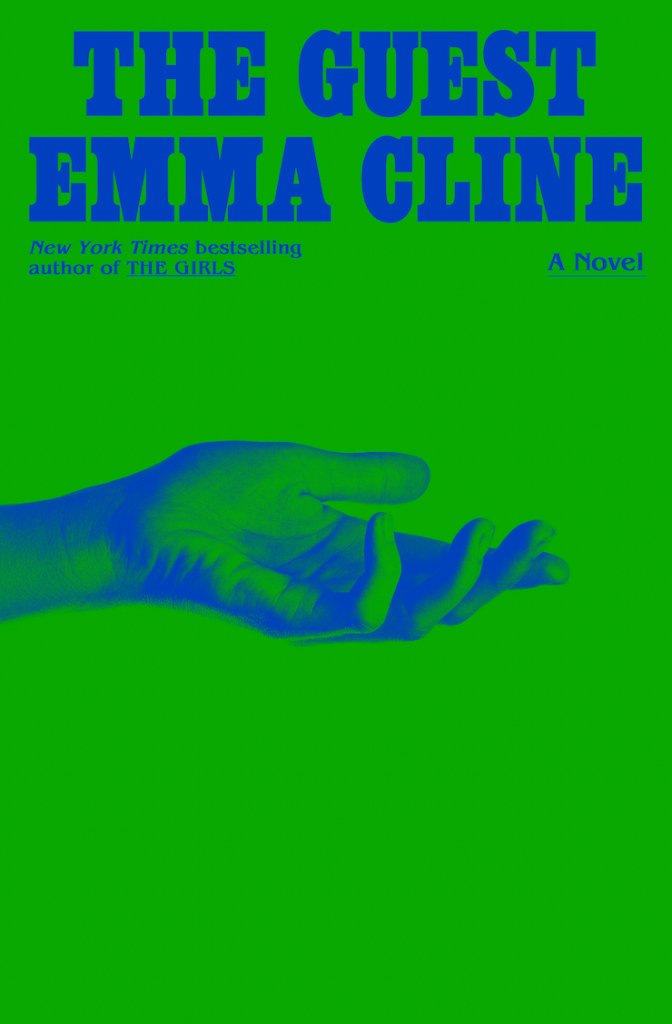
Inspired by this tweet (“This book is viscerally upsetting, lol. What the fuck”), I read The Guest by Emma Cline.

The inside flap offers an accurate description of the story: Alex makes a “misstep at a dinner party” and ends up wandering around Long Island. She has “few resources and a waterlogged phone, but [is] gifted with an ability to navigate the desires of others.” She is indeed “propelled by desperation and a mutable sense of morality” and “a cipher leaving destruction in her wake.”

And, yes, the book is viscerally upsetting.

Is the story about status and hierarchies? Yes. Is it about appearances and identity? Yes. Is it about the transactional roles young women play in American society? Yes.

Is it about a young woman who has nowhere to live? Yes: Alex is homeless.

This is not the reason why I chose to read this book. (Honestly, the only thing I knew about the book was from that tweet. We can wonder together why I wanted to read something “viscerally upsetting”).

It’s not Alex’s status as a homeless person that turns the stomach. (I don’t even know how many readers use the frame of homelessness while reading this story.) It’s the odious nature of her choices, how unsettling her behavior is. She is not endearing. (Kudos to Cline for creating a character who is unlikeable yet compelling.) We readers get caught up in the appearances of luxury and decadence that we forget that Alex is trying to find a stable place to live.

We never learn Alex’s backstory; we don’t know where she is from, what happened to her in the more distant past, or how she came to behave this way. Part of the point of the novel, I think, is that we can never know: Appearances are what matter. You can tell any story you want to get your needs met.

For readers who want to make their lives more difficult (…), this book introduces uncomfortable questions related to homelessness:

  • If a young woman is despicable, does she deserve to be homeless?
  • What do we want to happen to young women we don’t like? Do we want them to suffer? Is homelessness a sufficient punishment?
  • Do we therefore assume that all people who are homeless must have done terrible things?

Then there’s the question of redemption. The events of The Guest unfold over the course of one week. Do we think Alex could ever redeem herself? What if it takes a year? or five?

Should people who are unlikeable be homeless until they redeem themselves?

Maybe Alex is a cipher, but, more importantly, she has no place to live. That’s why she’s “propelled by desperation and a mutable sense of morality”. Perhaps we take comfort in the idea that Alex is a character, that this is a novel.

  • Would we make similar choices if we were in Alex’s situation?
  • Could we also do such unlikeable things if we were homeless?

What if the homeless young women we encounter aren’t anything like Alex? Might we want to make different choices ourselves?

(And, yes, to be clear, I do recommend The Guest.)

Categories
Education Homelessness Policy Public health psychiatry Systems

What I Talked About: Complexities.

Many thanks to those of you who left comments or sent me a note in response to my call for suggestions for a presentation about homelessness and mental illness.

I gave the presentation earlier this week and ended up presenting (a) homelessness data specific to Seattle-King County, (b) general data in in published research about rates of different psychiatric conditions in people experiencing homelessness (there’s actually not a lot of data about this; my understanding is that there is a national study underway right now to assess people experiencing homelessness through structured psychiatric interviews), and (c) the topic of “Involuntarily Removing Mentally Ill People from Streets“. I asked the group—students within various health professions schools—for their thoughts about New York City’s plan.

Many of the students were unfamiliar with involuntary detention for psychiatric reasons, along with the process for how that happens (the laws in Washington State differ from those in most other states in the nation; namely, physicians and other mental health professionals in Washington State cannot detain people directly; we must call a third party, called Designated Crisis Responders, and refer someone for detention). The initial group consensus favored civil liberties; they spoke of loss of dignity, the psychological and physical trauma that can result from involuntary detention, and the importance of autonomy.

When the scenario was adjusted so that the person who was experiencing homelessness and major psychiatric symptoms was someone that the students knew and loved, they quickly changed their arguments to support involuntary detention. When we love someone, we are more comfortable taking away their rights.

Like many complex issues, “right” answers escape us as more facets of the problem are illuminated. Involuntary detention itself is a complicated issue and, because most people are not experiencing homelessness, the majority of people who are detained are people who have an indoor place they call home.

Some research indicates that around 76% of people experiencing homelessness also have a psychiatric disorder, though the association is complex and likely goes in both directions: Some people have a psychiatric condition that contributes to poverty and then homelessness (e.g., losing a job); others become homeless and then develop a psychiatric condition due to the challenges of not knowing where you will sleep at night.

I continue to learn the complexities of working at the intersections of poverty and mental health. I am grateful that more people are interested in this work, too. I hope that things don’t have to get worse before we can offer better help and care to these individuals, who are ultimately our neighbors.

Categories
COVID-19 Homelessness Nonfiction Observations Policy Public health psychiatry Seattle

Gifts of Our Lives.

Photo by Leeloo Thefirst

(I know it’s the holiday season and I promise I’m not actually a grinch, but here’s your warning: This is going to be kind of a bummer of a post.)

Some recent scenes for your consideration:

  • The sliding wooden gate did nothing to dampen the sounds of traffic on the boulevard. Inside the wooden gate was a parking lot that was now occupied by around 40 small sheds, each painted a different color. At one end was an open-air shared kitchen and a set of small bathrooms. It was snowing, the kind of wet, clumpy snow that doesn’t stick, but instead seeps immediately into clothes, hats, and sleeping bags. Though people in this “village” are still technically homeless, they were at least protected from this unusual Seattle weather. Within a few minutes of my arrival, a skinny kid, maybe eight or nine years old, wearing a sweater, shorts, and sandals, ambled outside alone to look up at the sky. Later, another skinny kid, maybe thirteen or fourteen, came out, his hands shoved into the pockets of his sweatpants and his eyes fixed on the ground. I wondered what their ACEs scores were and hoped that, as adults, they would escape and remain out of homelessness.
  • As I threaded my way through the city and the morning chill, I kept a mental tally: One man wearing a tank top and making grand gestures at the sky; another shirtless man pacing in tight circles; one woman wearing a soiled hoodie, with either black ink or a black substance smeared across the bottom half of her face, picking up trash from water pooled in the gutter; a man hobbling with a cane and screaming a melody; a man emerging from a collapsed tent to fold up a crinkled black tarp; a woman with bare legs and swaths of bright green caked on her eyelids who, in slurred speech, offered me a wristwatch dangling from her fingers.
  • “We have burned down the house of mental health in this city, and the people you see on the street are the survivors who staggered from the ashes,” writes Anthony Almojera, an N.Y.C. Paramedic [who has] Never Witnessed a Mental Health Crisis Like This One, who also comments that “there’s a serious post-pandemic mental health crisis.”

Maybe my expectations about the pandemic response were too high. A pandemic is an act of God; what could mankind possibly do that can deter the power of God?

And yet.

There were things we could have done to protect mental health during a pandemic. I am not the only one who was (and remains) worried about the psychological consequences of this pandemic in the years to come. There remains insufficient mental health policy or policy implementation, insufficient resources, and insufficient political will, among other implementation failures of public mental health.

I do believe that hope is a discipline. It’s hard to practice every day. But this is why I still question whether my expectations were too high. God spared us—you, dear reader, and me—during this pandemic. For what reason? What can and should we do with the gifts of our lives?