Categories
Homelessness Observations Reading

The Guest Who Has No Place to Live.

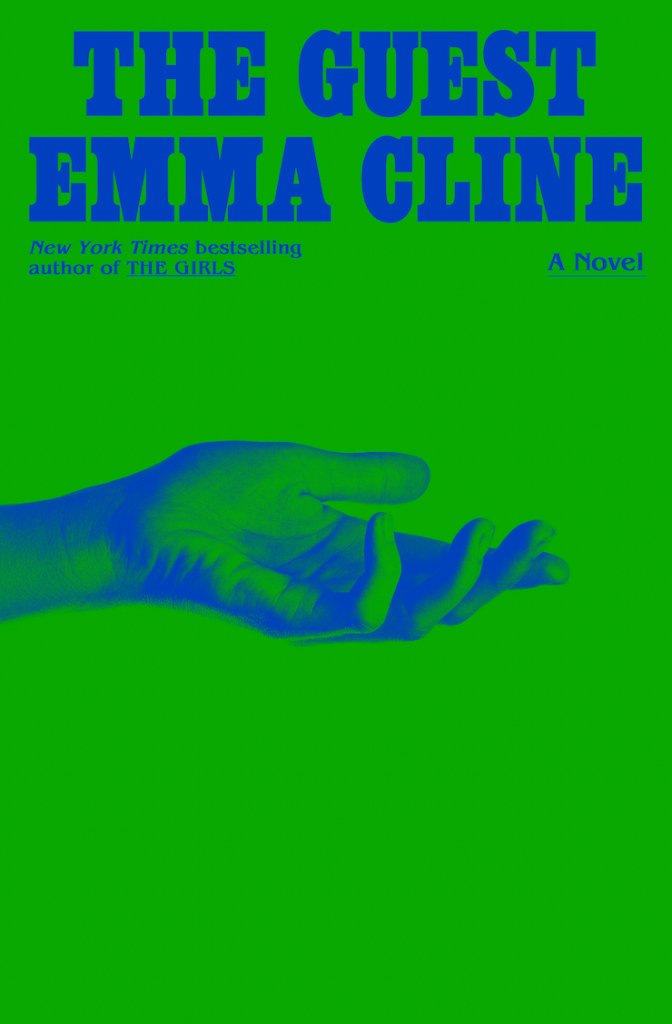
Inspired by this tweet (“This book is viscerally upsetting, lol. What the fuck”), I read The Guest by Emma Cline.

The inside flap offers an accurate description of the story: Alex makes a “misstep at a dinner party” and ends up wandering around Long Island. She has “few resources and a waterlogged phone, but [is] gifted with an ability to navigate the desires of others.” She is indeed “propelled by desperation and a mutable sense of morality” and “a cipher leaving destruction in her wake.”

And, yes, the book is viscerally upsetting.

Is the story about status and hierarchies? Yes. Is it about appearances and identity? Yes. Is it about the transactional roles young women play in American society? Yes.

Is it about a young woman who has nowhere to live? Yes: Alex is homeless.

This is not the reason why I chose to read this book. (Honestly, the only thing I knew about the book was from that tweet. We can wonder together why I wanted to read something “viscerally upsetting”).

It’s not Alex’s status as a homeless person that turns the stomach. (I don’t even know how many readers use the frame of homelessness while reading this story.) It’s the odious nature of her choices, how unsettling her behavior is. She is not endearing. (Kudos to Cline for creating a character who is unlikeable yet compelling.) We readers get caught up in the appearances of luxury and decadence that we forget that Alex is trying to find a stable place to live.

We never learn Alex’s backstory; we don’t know where she is from, what happened to her in the more distant past, or how she came to behave this way. Part of the point of the novel, I think, is that we can never know: Appearances are what matter. You can tell any story you want to get your needs met.

For readers who want to make their lives more difficult (…), this book introduces uncomfortable questions related to homelessness:

  • If a young woman is despicable, does she deserve to be homeless?
  • What do we want to happen to young women we don’t like? Do we want them to suffer? Is homelessness a sufficient punishment?
  • Do we therefore assume that all people who are homeless must have done terrible things?

Then there’s the question of redemption. The events of The Guest unfold over the course of one week. Do we think Alex could ever redeem herself? What if it takes a year? or five?

Should people who are unlikeable be homeless until they redeem themselves?

Maybe Alex is a cipher, but, more importantly, she has no place to live. That’s why she’s “propelled by desperation and a mutable sense of morality”. Perhaps we take comfort in the idea that Alex is a character, that this is a novel.

  • Would we make similar choices if we were in Alex’s situation?
  • Could we also do such unlikeable things if we were homeless?

What if the homeless young women we encounter aren’t anything like Alex? Might we want to make different choices ourselves?

(And, yes, to be clear, I do recommend The Guest.)

Categories
Medicine Observations Systems

On Who People Think You Are.

The author wearing a black face mask while holding a soft serve cone. The wall behind her features a cone that looks like a fish that has green soft serve in it.
A photo of yours truly wearing a mask. Photo credit to Amy L.

There were two patients in the hospital room. Both were elderly East Asian males, each reclining in his bed. The curtain that divided the room in half was pulled forward, offering the illusion of privacy. Sound still travels through cloth.

Outside the hospital room I rubbed sanitizer onto my hands. The only size of blue plastic gowns offered was extra-large. My arms swam through the enormous sleeves as I pulled the gown over my yellow sweatshirt. The only gloves available were size large, which I slid onto my hands before putting goggles on my face. I was already wearing an N95 mask. Only my black track pants and black sneakers emerged from my blue contact precautions.

My dad had alerted me that, overnight, he was moved from a private isolation room into a shared room. His roommate, though ethnically Chinese, spent much of his life in a different country in Asia. He spoke limited English. They quickly discerned that they both speak Chinese.

Within a few minutes, I pushed the curtain back so the divided room became whole. Chinese conversation flowed among the three of us, punctuated by occasional wet coughs rattling through the torsos of the two men.

If I looked right, I could see through the window in the door. Sometimes staff walked by, paused, and waved. One was a man in his fifties who, at one point, opened the door and said to me, “We’re thinking we might discharge him today.” He gave me a thumbs up sign and shut the door before I could respond. He wasn’t my father’s doctor.

Later, my father’s nurse walked in and asked who I was. “Oh,” she commented, “I thought you were the interpreter.”

The other man’s nurse walked in minutes after that and asked who I was. “Oh,” she said, “I thought you were a physical therapist.”

Later, in the hallway, the man who appeared to be in his fifties waved me down. He was wearing a long white coat and there was a red label on his ID badge that said “Doctor”. His eyes smiled at me as he asked, “How is your dad doing?”

I paused before asking, “May I ask who you think my dad is?”

“Mr. Other Guy,” he said effortlessly.

“That’s not my dad.”

“Oh?”

“The other Asian man is my dad.”

“Oh.” He was anchored in awkwardness.

“Thanks for taking care of Mr. Other Guy,” I said before walking away, releasing the anchor. He waited a beat before veering off in the other direction.

Categories
Consult-Liaison Observations Systems

Demoralization and Status.

This TikTok video provides an accurate (and shouty) summary of the National Guard member who leaked classified military documents. In short, it appears that the Airman shared these documents in an effort to elevate his status within an online cohort. (Someone on the internet opined something like, “This was a cosmic level of stepping on a rake that hits you in the face.” Correct.)

We all have engaged in behaviors to heighten our position in relation to others. Depending on who you ask, some argue that we are constantly adjusting our behaviors to communicate and maximize our status.

Our perception of our own status is not always accurate. It seems that we sometimes exert tremendous effort to demonstrate high status to make ourselves feel better, rather than to assert that we have higher rank than others. (Much research has been done to show how humans assess and react to status.)

Maybe it’s a stretch to link demoralization and status to each other, though this is what has come to my mind over the past few weeks. Demoralization is usually framed as an individual process, whereas status involves groups of people.

Merriam-Webster provides the following definitions:

  • demoralization: weakened morale; to be discouraged or dispirited
  • status: position or rank in relation to others

I’ve written about demoralization before, though it was more in reference to individuals experiencing medical illness. The paper I reference in that post offers this definition of demoralization:

the “various degrees of helplessness, hopelessness, confusion, and subjective incompetence” that people feel when sensing that they are failing their own or others’ expectations for coping with life’s adversities. Rather than coping, they struggle to survive.

This is where I might be speaking out of turn: Is it fair to apply principles usually applied to a single person, particularly one’s intrapsychic processes, to groups of people? (Would I be a true psychiatrist if I didn’t use the word “intrapsychic“?)

But let’s consider this together. I’m starting with the Airman, but that isn’t actually the point of this post.

What if that Airman was feeling demoralized? Within his Discord group, he may have been able to rely on his age to maintain high status. What teenager doesn’t think a 21 year-old person is cool? But what if group dynamics shifted and, suddenly, the Airman was no longer the proverbial “alpha”, but had been demoted to a “beta”?

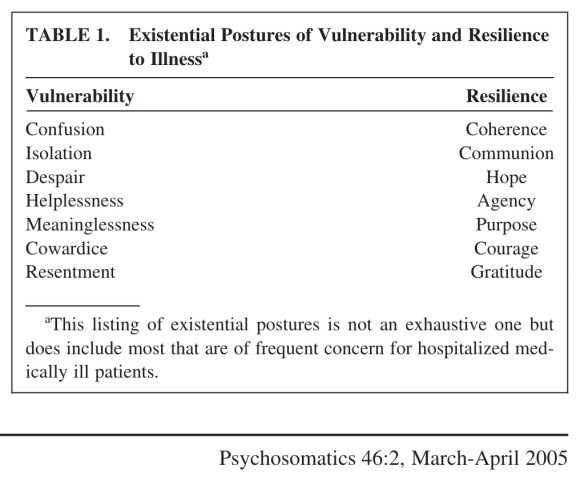
In an effort to restore his status, he might have employed any one of the strategies to reduce his vulnerability:

The sharing of classified military documents isn’t a demonstration of resilience, but it is a display of power that produces postures of coherence, agency, and courage. In sharing classified papers that only he has access to, he is dissolving any confusion he or anyone else may have about his “rightful” status. To combat feelings of helplessness, he demonstrated agency to provide evidence of his power. It takes some flavor of courage (…) to share sensitive information. By sharing these documents with his Discord cohort, he facilitated communion, established a purpose for himself, and got to bask in the gratitude of his friends. What a way to escape the isolation that accompanies a degradation of status!

So let’s consider other things that are happening in the nation that might be reactions to demoralization and efforts to reinstate high status: states banning TikTok, banning abortions at six weeks, protecting access to transgender care.

Again, is it fair to apply individual, intrapsychic processes to groups of people, particularly groups of people in politics? (But aren’t political groups comprised of individual people?)

The passage of laws—something that feels real and concrete—brings coherence and fosters communion! It brings hope and purpose! Doing something—exhibiting agency—summons courage and generates gratitude! Your rank in relation to others feels like it is rising. Even though there are people who will view your actions as further erosion of your status, it doesn’t matter: You feel better. You feel more power.

The passage of laws reduces confusion, despair, and helplessness. Instead of feeling isolated, people can channel their feelings of helplessness and resentment into doing something, which makes cowardice evaporate. You may already possess high status—all the other people around you may already defer to you because they view themselves as having lower status. And, yet, if you feel demoralized, the positive regard from others may be insufficient to elevate your own status in your own eyes.

We can never get away from ourselves.

Categories
COVID-19 Homelessness Nonfiction Observations Policy Public health psychiatry Seattle

Gifts of Our Lives.

Photo by Leeloo Thefirst

(I know it’s the holiday season and I promise I’m not actually a grinch, but here’s your warning: This is going to be kind of a bummer of a post.)

Some recent scenes for your consideration:

  • The sliding wooden gate did nothing to dampen the sounds of traffic on the boulevard. Inside the wooden gate was a parking lot that was now occupied by around 40 small sheds, each painted a different color. At one end was an open-air shared kitchen and a set of small bathrooms. It was snowing, the kind of wet, clumpy snow that doesn’t stick, but instead seeps immediately into clothes, hats, and sleeping bags. Though people in this “village” are still technically homeless, they were at least protected from this unusual Seattle weather. Within a few minutes of my arrival, a skinny kid, maybe eight or nine years old, wearing a sweater, shorts, and sandals, ambled outside alone to look up at the sky. Later, another skinny kid, maybe thirteen or fourteen, came out, his hands shoved into the pockets of his sweatpants and his eyes fixed on the ground. I wondered what their ACEs scores were and hoped that, as adults, they would escape and remain out of homelessness.
  • As I threaded my way through the city and the morning chill, I kept a mental tally: One man wearing a tank top and making grand gestures at the sky; another shirtless man pacing in tight circles; one woman wearing a soiled hoodie, with either black ink or a black substance smeared across the bottom half of her face, picking up trash from water pooled in the gutter; a man hobbling with a cane and screaming a melody; a man emerging from a collapsed tent to fold up a crinkled black tarp; a woman with bare legs and swaths of bright green caked on her eyelids who, in slurred speech, offered me a wristwatch dangling from her fingers.
  • “We have burned down the house of mental health in this city, and the people you see on the street are the survivors who staggered from the ashes,” writes Anthony Almojera, an N.Y.C. Paramedic [who has] Never Witnessed a Mental Health Crisis Like This One, who also comments that “there’s a serious post-pandemic mental health crisis.”

Maybe my expectations about the pandemic response were too high. A pandemic is an act of God; what could mankind possibly do that can deter the power of God?

And yet.

There were things we could have done to protect mental health during a pandemic. I am not the only one who was (and remains) worried about the psychological consequences of this pandemic in the years to come. There remains insufficient mental health policy or policy implementation, insufficient resources, and insufficient political will, among other implementation failures of public mental health.

I do believe that hope is a discipline. It’s hard to practice every day. But this is why I still question whether my expectations were too high. God spared us—you, dear reader, and me—during this pandemic. For what reason? What can and should we do with the gifts of our lives?

Categories
Consult-Liaison Observations

Floating and Sinking Boats.

Photo by Pixabay

I recently gave a presentation called “Difficult Interactions in Clinical Settings” and, in that talk, made a comment about how, in Western medicine, we often focus on the Physical Thing and do not attend to the Psychological Things. Physical Things often affect Psychological Things (and vice versa) and sometimes the Psychological Things cause more distress than the Physical Thing.

This is one reason why some (many?) people don’t like to take medicine, even for chronic conditions that will get worse without treatment. This is especially true when people have limited to no symptoms. If people hold the idea that they are healthy, the act of taking medicine is a direct contradiction to this idea. If you are sick, then why do you feel fine? does that mean that your illness might get worse? that you might die from this illness? This fear—this Psychological Thing—is compelling enough to chase people away from health care of any flavor: If no one tells me that there is something wrong with me, then there is nothing wrong with me. (Even this framing of “wrong” is interesting: Is illness “wrong”?)

Psychological Things often drive behavior, though the engine might seem like a tangible, Physical Thing, like money or power. We also rarely escape our own Psychological Things, even if we are able to name it, greet it warmly, and understand how it makes things difficult for us. (“Insight alone does not result in behavior change.”)

Sometimes, when we cannot escape our own Psychological Things, our inability to face and embrace these Things spills out for the rest of the world to see. Sometimes this makes us write 14-page letters.

Relationships, specifically those involving platonic or romantic love, while meaningful and rewarding, can also be challenging. It requires spending time and energy considering what floats your boat, as well as what floats the other person’s boat. It is hard to think about what floats someone else’s boat when your boat feels like it is constantly sinking.

Sometimes things will happen, though, that bring buoyancy to your boat, things that are immediate, measurable, and seemingly indisputable. Thousands of people chanting in a national park? Millions of ballots with notations next to your name? A chart with ratings from a television program? These are concrete, Physical Things.

Consider the fuzzy factors in Psychological Things: How amorphous they are! How much do you love your children? Is your spouse actually devoted to you? How do you know that your friends actually care about you? None of these are iron anchors that will bring you confidence in who or where you are; they are unreliable, invisible winds that you cannot control. The winds might help you, but they might also strand you.

The boat seems to sink faster when you lack esteem and respect for yourself. When you are uncertain about who you are and your status among people, how are you supposed to trust and respect uncertain forces like the wind?

Power and authority confer Physical Things, but these Physical Things cannot fill the gaping wound(s) left behind from the Psychological Things.

Who are you if you don’t have a title? Do you exist if no one is paying attention to you? What is your identity if no one tells you who you are?

How do you tolerate silence? What are your thoughts when you are by yourself? What if you can’t tolerate your own thoughts about yourself?

(Who are you between your thoughts?)

Maybe write a letter. Letters and words and sentences on paper are Physical Things. Letters are immediate, measurable, and seemingly indisputable. Make them see and respect you when you can’t see and respect yourself. When they react, you might know that you still exist, that your boat is still afloat.