Categories
Consult-Liaison Observations Systems

Demoralization and Status.

This TikTok video provides an accurate (and shouty) summary of the National Guard member who leaked classified military documents. In short, it appears that the Airman shared these documents in an effort to elevate his status within an online cohort. (Someone on the internet opined something like, “This was a cosmic level of stepping on a rake that hits you in the face.” Correct.)

We all have engaged in behaviors to heighten our position in relation to others. Depending on who you ask, some argue that we are constantly adjusting our behaviors to communicate and maximize our status.

Our perception of our own status is not always accurate. It seems that we sometimes exert tremendous effort to demonstrate high status to make ourselves feel better, rather than to assert that we have higher rank than others. (Much research has been done to show how humans assess and react to status.)

Maybe it’s a stretch to link demoralization and status to each other, though this is what has come to my mind over the past few weeks. Demoralization is usually framed as an individual process, whereas status involves groups of people.

Merriam-Webster provides the following definitions:

  • demoralization: weakened morale; to be discouraged or dispirited
  • status: position or rank in relation to others

I’ve written about demoralization before, though it was more in reference to individuals experiencing medical illness. The paper I reference in that post offers this definition of demoralization:

the “various degrees of helplessness, hopelessness, confusion, and subjective incompetence” that people feel when sensing that they are failing their own or others’ expectations for coping with life’s adversities. Rather than coping, they struggle to survive.

This is where I might be speaking out of turn: Is it fair to apply principles usually applied to a single person, particularly one’s intrapsychic processes, to groups of people? (Would I be a true psychiatrist if I didn’t use the word “intrapsychic“?)

But let’s consider this together. I’m starting with the Airman, but that isn’t actually the point of this post.

What if that Airman was feeling demoralized? Within his Discord group, he may have been able to rely on his age to maintain high status. What teenager doesn’t think a 21 year-old person is cool? But what if group dynamics shifted and, suddenly, the Airman was no longer the proverbial “alpha”, but had been demoted to a “beta”?

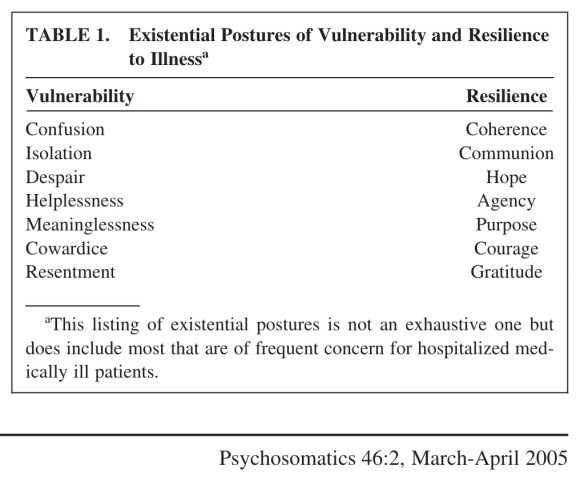
In an effort to restore his status, he might have employed any one of the strategies to reduce his vulnerability:

The sharing of classified military documents isn’t a demonstration of resilience, but it is a display of power that produces postures of coherence, agency, and courage. In sharing classified papers that only he has access to, he is dissolving any confusion he or anyone else may have about his “rightful” status. To combat feelings of helplessness, he demonstrated agency to provide evidence of his power. It takes some flavor of courage (…) to share sensitive information. By sharing these documents with his Discord cohort, he facilitated communion, established a purpose for himself, and got to bask in the gratitude of his friends. What a way to escape the isolation that accompanies a degradation of status!

So let’s consider other things that are happening in the nation that might be reactions to demoralization and efforts to reinstate high status: states banning TikTok, banning abortions at six weeks, protecting access to transgender care.

Again, is it fair to apply individual, intrapsychic processes to groups of people, particularly groups of people in politics? (But aren’t political groups comprised of individual people?)

The passage of laws—something that feels real and concrete—brings coherence and fosters communion! It brings hope and purpose! Doing something—exhibiting agency—summons courage and generates gratitude! Your rank in relation to others feels like it is rising. Even though there are people who will view your actions as further erosion of your status, it doesn’t matter: You feel better. You feel more power.

The passage of laws reduces confusion, despair, and helplessness. Instead of feeling isolated, people can channel their feelings of helplessness and resentment into doing something, which makes cowardice evaporate. You may already possess high status—all the other people around you may already defer to you because they view themselves as having lower status. And, yet, if you feel demoralized, the positive regard from others may be insufficient to elevate your own status in your own eyes.

We can never get away from ourselves.

Categories
COVID-19 Homelessness Nonfiction Observations Policy Public health psychiatry Seattle

Gifts of Our Lives.

Photo by Leeloo Thefirst

(I know it’s the holiday season and I promise I’m not actually a grinch, but here’s your warning: This is going to be kind of a bummer of a post.)

Some recent scenes for your consideration:

  • The sliding wooden gate did nothing to dampen the sounds of traffic on the boulevard. Inside the wooden gate was a parking lot that was now occupied by around 40 small sheds, each painted a different color. At one end was an open-air shared kitchen and a set of small bathrooms. It was snowing, the kind of wet, clumpy snow that doesn’t stick, but instead seeps immediately into clothes, hats, and sleeping bags. Though people in this “village” are still technically homeless, they were at least protected from this unusual Seattle weather. Within a few minutes of my arrival, a skinny kid, maybe eight or nine years old, wearing a sweater, shorts, and sandals, ambled outside alone to look up at the sky. Later, another skinny kid, maybe thirteen or fourteen, came out, his hands shoved into the pockets of his sweatpants and his eyes fixed on the ground. I wondered what their ACEs scores were and hoped that, as adults, they would escape and remain out of homelessness.
  • As I threaded my way through the city and the morning chill, I kept a mental tally: One man wearing a tank top and making grand gestures at the sky; another shirtless man pacing in tight circles; one woman wearing a soiled hoodie, with either black ink or a black substance smeared across the bottom half of her face, picking up trash from water pooled in the gutter; a man hobbling with a cane and screaming a melody; a man emerging from a collapsed tent to fold up a crinkled black tarp; a woman with bare legs and swaths of bright green caked on her eyelids who, in slurred speech, offered me a wristwatch dangling from her fingers.
  • “We have burned down the house of mental health in this city, and the people you see on the street are the survivors who staggered from the ashes,” writes Anthony Almojera, an N.Y.C. Paramedic [who has] Never Witnessed a Mental Health Crisis Like This One, who also comments that “there’s a serious post-pandemic mental health crisis.”

Maybe my expectations about the pandemic response were too high. A pandemic is an act of God; what could mankind possibly do that can deter the power of God?

And yet.

There were things we could have done to protect mental health during a pandemic. I am not the only one who was (and remains) worried about the psychological consequences of this pandemic in the years to come. There remains insufficient mental health policy or policy implementation, insufficient resources, and insufficient political will, among other implementation failures of public mental health.

I do believe that hope is a discipline. It’s hard to practice every day. But this is why I still question whether my expectations were too high. God spared us—you, dear reader, and me—during this pandemic. For what reason? What can and should we do with the gifts of our lives?

Categories
Consult-Liaison Observations

Floating and Sinking Boats.

Photo by Pixabay

I recently gave a presentation called “Difficult Interactions in Clinical Settings” and, in that talk, made a comment about how, in Western medicine, we often focus on the Physical Thing and do not attend to the Psychological Things. Physical Things often affect Psychological Things (and vice versa) and sometimes the Psychological Things cause more distress than the Physical Thing.

This is one reason why some (many?) people don’t like to take medicine, even for chronic conditions that will get worse without treatment. This is especially true when people have limited to no symptoms. If people hold the idea that they are healthy, the act of taking medicine is a direct contradiction to this idea. If you are sick, then why do you feel fine? does that mean that your illness might get worse? that you might die from this illness? This fear—this Psychological Thing—is compelling enough to chase people away from health care of any flavor: If no one tells me that there is something wrong with me, then there is nothing wrong with me. (Even this framing of “wrong” is interesting: Is illness “wrong”?)

Psychological Things often drive behavior, though the engine might seem like a tangible, Physical Thing, like money or power. We also rarely escape our own Psychological Things, even if we are able to name it, greet it warmly, and understand how it makes things difficult for us. (“Insight alone does not result in behavior change.”)

Sometimes, when we cannot escape our own Psychological Things, our inability to face and embrace these Things spills out for the rest of the world to see. Sometimes this makes us write 14-page letters.

Relationships, specifically those involving platonic or romantic love, while meaningful and rewarding, can also be challenging. It requires spending time and energy considering what floats your boat, as well as what floats the other person’s boat. It is hard to think about what floats someone else’s boat when your boat feels like it is constantly sinking.

Sometimes things will happen, though, that bring buoyancy to your boat, things that are immediate, measurable, and seemingly indisputable. Thousands of people chanting in a national park? Millions of ballots with notations next to your name? A chart with ratings from a television program? These are concrete, Physical Things.

Consider the fuzzy factors in Psychological Things: How amorphous they are! How much do you love your children? Is your spouse actually devoted to you? How do you know that your friends actually care about you? None of these are iron anchors that will bring you confidence in who or where you are; they are unreliable, invisible winds that you cannot control. The winds might help you, but they might also strand you.

The boat seems to sink faster when you lack esteem and respect for yourself. When you are uncertain about who you are and your status among people, how are you supposed to trust and respect uncertain forces like the wind?

Power and authority confer Physical Things, but these Physical Things cannot fill the gaping wound(s) left behind from the Psychological Things.

Who are you if you don’t have a title? Do you exist if no one is paying attention to you? What is your identity if no one tells you who you are?

How do you tolerate silence? What are your thoughts when you are by yourself? What if you can’t tolerate your own thoughts about yourself?

(Who are you between your thoughts?)

Maybe write a letter. Letters and words and sentences on paper are Physical Things. Letters are immediate, measurable, and seemingly indisputable. Make them see and respect you when you can’t see and respect yourself. When they react, you might know that you still exist, that your boat is still afloat.

Categories
Consult-Liaison Education Observations

Racial Slurs and Psychiatric Illness.

Photo by Mary Jane Duford

It doesn’t happen often, but it does happen: People have directed racial or misogynist slurs at me. (I’m an equal opportunity target!) When they announce their perspectives, they are almost always shouting and their tones of voice suggest anger and disgust.

Rarely do people with psychiatric conditions, such as schizophrenia or bipolar disorder, express displeasure with my race or sex. I can only think of three examples when this occurred (though, to be fair, I just don’t remember the other times when this has happened):

  • A woman in a crisis center who insisted that I was Bruce Lee’s sister, then proceeded to scream, “Chink!“, when I told her I was not;
  • A man with dementia in a hospital who felt compelled to tell me (and only me) in a loud voice about the “gooks” he killed during war; and
  • A man in a jail cell in psychiatric housing who, upon seeing me walk onto the unit, made loud comments about “fucking dykes with short hair“.

It is far more common for people out in the community to shout racial and misogynistic slurs to me in passing. Sometimes their apparel is shabby and soiled; more often, their clothes are clean and their cars are shiny.

My data comes from an N of 1, but this is how I think about it: Yes, it is possible for someone with a psychiatric condition to use speech brimming with prejudice only when they are experiencing acute symptoms. However, most people with psychiatric conditions, in my anecdotal experience, do not, regardless of acute or chronic psychiatric symptoms. If they do have prejudices, they are able to keep them to themselves, even when they are unable to contain any delusions. If they are expressing ideas about people, they tend to be specific to how an individual relates to them (e.g., that person is trying to kill me; that person knows I don’t have internal organs; those people can hear my thoughts; etc.).

Could it be that the use of racial slurs in of itself reflects mental illness? I don’t think so. Humans are adept at creating and using categories. We have all created and applied useless categories. For example, I am on Team Candy Corn. This team serves no purpose and it should not be a point of pride, but here we are. There is, of course, a difference between Team Candy Corn and Team Nazis, though the underlying principle of creating categories and then putting people into them is the same. (On Team Candy Corn, we do not hate and dehumanize.)

People with psychiatric conditions like schizophrenia, like most other people, can feel hate. People with psychiatric conditions like schizophrenia, like most other people, are not hateful.

Categories
Consult-Liaison Observations Reading Reflection

Therapy and the Use of Words.

Photo by Pixabay

A flurry of mental health-related articles have piqued my attention recently, many of which are worth writing about. We’ll start with one article from the New York Times’s new series, It’s Not Just You: A Times Opinion project on mental health and society in America today.

Huw Green, a clinical psychologist, writes in We Have Reached Peak ‘Mental Health’:

The contemporary cultural landscape’s recent zeal for mental health as an important good has been accompanied by a faith in therapy as the best way to obtain it. …

Therapy is important as a valuable health intervention for many, rather than a universal prerequisite to a good life. Most people simply cannot afford to have lengthy therapy, or it doesn’t fit with their cultural or religious worldview. Do we really want to suggest that this compromises their mental health or their ability to do things like parent well?

Recently, a man at work asked me if he should “get therapy”. A horrifying event happened in his life about six months ago. Someone who cares about him has been haranguing him to go to therapy. He wondered if he should heed that suggestion.

I have provided therapy. I’ve also received therapy myself, which I found both helpful at the time and since it ended. How did I respond to this man?

“The only person who can answer [if you should get therapy] is you.” (Which I realize is a shrinky thing to say that is also not helpful. I elaborated further, which is what follows.)

I don’t think there was ever a time that I thought that “everyone should go to therapy”. Can it be helpful? Yes. Can it improve your life in multiple dimensions? Yes.

Can it take a lot of time? Yes. Can it cost a lot of money? Yes. (Do you think about things you’d rather avoid? Often. Do you sometimes dread going to therapy? Absolutely.)

Could you do something else just as valuable and healthful with your time? Yes.

The thing about conventional therapy is that it has a heavy reliance on words. You have to be able and willing to use words to describe your internal experiences, whether they be thoughts, emotions, or behaviors. You have to be able and willing to sit in a room with another person for dozens of minutes, week after week, often for months, and sometimes for years while using words. (… though I personally believe that no one should be in therapy for many years: If you’ve been routinely seeing a therapist for five or ten years and your presenting concerns or symptoms have not improved, is therapy actually helping you?)

And you know what? Not everyone likes using words. Or using words is not one of their strengths. It is true that part of the task of therapy is learning how to use words as a skill and for therapeutic purposes. While some people will, in the course of therapy, learn to use words instead of drinking three bottles of wine a night or making superficial cuts on their limbs, some people will find using words difficult, uncomfortable, or artificial.

Therapy is often the most successful when people have clear goals (that they can express in words). It’s hard to say you’ve achieved a goal when you are unable to describe it through the specific medium of language.

Furthermore, much of the task of therapy is learning about yourself: How do you react to events in life? Do your reactions cause problems or difficulties for you? For others? Does your reaction serve other purposes in your life? (e.g., Are you always apologizing because you always believe that you’re doing something wrong, and this is how you absolve yourself?) What would happen if you viewed life events, whether internal or external, differently? What if you believed you could make different choices? What if the stories you tell yourself aren’t accurate or true?

Do you need to receive therapy to learn about yourself in this way? I don’t believe so.

People can achieve psychological wellness (note: wellness, not perfection, which is what the term “mental health” seems to suggest these days) through many non-verbal activities:

  • playing a musical instrument
  • listening to music
  • dancing or other inspired movement
  • walking alone
  • walking with trees, mountains, and skies
  • drawing, whether the process is seen or unseen
  • running
  • sitting, with or without spiritual practices like prayer

… and other things that don’t involve words.

People want to live healthy, meaningful lives. Huw Green is right: Therapy isn’t required for this.