Categories
Public health psychiatry

Killing and Mental Disorders.

Though over three years have passed since the start of the pandemic, we on Earth have yet to escape the specters of death and destruction. With murderous tragedies large and small happening around the globe, one might wonder, “All these people who are killing other people: There must be something wrong with them. Do they have a mental disorder?”

The Diagnostic and Statistical Manual, now in its fifth, text-revised edition, provides this definition for “mental disorder” (emphases mine):

A mental disorder is a syndrome characterized by clinically significant disturbance in an individual’s cognition, emotion regulation, or behavior that reflects a dysfunction in the psychological, biological, or developmental processes underlying mental functioning. Mental disorders are usually associated with significant distress or disability in social, occupational, or other important activities. An expectable or culturally approved response to a common stressor or loss, such as the death of a loved one, is not a mental disorder. Socially deviant behavior (e.g., political, religious, or sexual) and conflicts that are primarily between the individual and society are not mental disorders unless the deviance or conflict results from a dysfunction in the individual, as described above.

Let’s consider some examples:

The man who shot 18 people in Maine. There are accounts that he has heard voices in the recent past. It is unclear if these voices were related to his threats to carry out a shooting at a military base. Reporting suggests that these two events resulted in a psychiatric hospitalization.

If we assume that he is still experiencing now the symptoms he had over the summer, he has a disturbance in his cognition (hearing voices) and behavior (use of a firearm to kill other people). We don’t know if the voices have caused him distress. He is certainly experiencing major disability at this time, as it seems that he has no social connections at this moment and he isn’t able to engage in activities such as work and leisure. He has demonstrated socially deviant behavior that, at least the way it is reported, is related to a dysfunction inherent to him.

Thus, it seems likely that this man who has killed 18 people in Maine has a mental disorder.

The Long Island Sex Killer. This is the man who allegedly killed 11 women between 1996 and 2011 and put their remains on Gilgo Beach. This man worked as an architect in New York City, was married, and had children.

It is debatable if he had a clinically significant disturbance in his thoughts, emotions, and behaviors: No one in his life seemed to notice any disturbances. For 15 years he presumably didn’t exhibit concerning distress or disability, as he was able to maintain multiple roles in his life with success. No one knew of his socially deviant behavior until he was caught.

Under this framework and given what has been shared, the Long Island Sex Killer does not appear to have a mental disorder.

People fighting in wars. This can include a military attacking an opposing nation-state, an organization attacking a nation-state, or a nation-state attacking an exclave.

We’ve already encountered a barrier: Mental disorders, by definition, only occur in individuals, not populations.

So let’s broadly consider the leadership of these populations, such as elected officials and others with high rank and authority. Propaganda obscures whether any of them are exhibiting disturbances. Note that their followers would not interpret their leaders’ thoughts, emotions, and behaviors as disturbed. Any distress the leaders express is related to their rage towards the enemy. Anyone showing disability would likely be removed, as this would be construed as a vulnerability. Attacking the enemy is not socially deviant behavior. (Resisting such efforts is.)

Leaders who order the killing of other people, in this framework, do not have mental disorders.

(As you already know, those fighting and harmed in wars are at higher risk of developing mental disorders. It is unjust that once someone demonstrates disturbances, distress, and disability due to war, the consequences of a state action land solely on individuals who must bear the psychological burdens and stigma.)

So, if mental disorders are not the underlying reason why people kill other people, then what is?

(Evil?)

(If it is evil, that is not something psychiatrists can treat.)

Categories
Homelessness Nonfiction Policy Public health psychiatry

Age and Vulnerability.

She was unprepared: One woolen blanket was wrapped around her shoulders. The other one was spread out so she did not have to sit directly on the ivy and weeds crawling across the hillside. A nylon sheet was rumpled by her side. Behind her was a pushcart that held a thin roll of garbage bags and a small empty cardboard box. There was no tent or sleeping bag. Though there were other people higher on the hillside, there was no one within earshot.

Most of the pages in her notebook were blank. The pen ink was bright turquoise; her penmanship was small and neat.

Small metal studs adorned her ears and a chunky chain was around her slender neck. Her hair was dyed an unnatural color and showed no signs of fading. The only hints that revealed that was not brand new to the hillside were the dust on her fashionable sneakers and the dirt that was collecting underneath her short fingernails. She also said that her phone had run out of charge.

She is not yet 20 years old.


I don’t expect that they are still alive, though I still think of them even when I’m not visiting New York City.

I met her when she was in her mid-60s. She never told us where she slept, though we reliably found her at the ferry terminal. Her fingers moved the needle and thread with ease to close the hole in her sock. She kept spools of thread in a plastic container that sat on the bundle of clothes she packed into her pushcart. Despite our best efforts for over two years, she never accepted housing: “The aliens will exterminate me if I go inside.”

I met him when he was in his 70s, or so we thought. No one knew his birthdate; he never shared this information. He buried himself between mounds of full trashbags or folded himself into cardboard boxes lining the curb. On the few occasions he spoke, the thinness of his voice—sometimes so faint that it seemed that only wisps of his speech reached my ears—betrayed his age.

Back here in Seattle, as elsewhere, there are people in their 70s and 80s who live outside or in shelters.


People under the age of 25 who are on their own and homeless are called “unaccompanied youth”. They are “considered vulnerable due to their age”. These unaccompanied youth make up about 5% of the homeless population in the US.

As the US population ages, people who are homeless are also aging. A study of homeless people in California found that 47% of all homeless adults are 50 years of age or older. Even more alarming, nearly half of all homeless people over 50 years of age first became homeless after they turned 50 years old!

Why do we consider “extremes” of age (though being in your late teens or your 70s is not actually “extreme”) as a factor that contributes to vulnerability when homeless? If you’re a 51 year-old man and you don’t know where you’re going to sleep tonight, doesn’t the variable of not knowing where you’re going to sleep tonight automatically make you vulnerable? Sure, you may have the size and mass to successfully defend yourself if someone attacks you or the ability to endure nighttime temperatures, but is that really where we’ve set the bar for vulnerability?

Categories
Funding Policy Public health psychiatry Seattle Systems

Crisis Care Centers Aren’t Enough.

The Tacoma News Tribune graciously agreed to publish an opinion piece an esteemed fellow psychiatrist and I wrote. I invite you to read the 500-word essay, Crisis care centers are important. But WA needs more to fill behavioral health gaps, directly through the newspaper (and show a local newspaper some appreciation through page views!). The piece has particular relevance to residents in King County in Washington State.

If you have more time and would like to read the original version, you can find it below. Thanks for your interest.


King County voters will decide whether to fund a network of crisis care centers in April. There are many reasons to support this: We all know people who have experienced behavioral health crises, including kids in school; colleagues at work; family members; and people we encounter in the community.

Because King County currently has only one crisis center, additional centers will help. However, the entire behavioral health system in Washington is in crisis. A narrow focus on these centers only may lead to even more people tumbling into crisis.

King County has explained that these five crisis centers will “provide a safe place… specifically designed, equipped and staffed for behavioral health urgent care. These Centers will provide immediate mental health and substance use treatment and promote long-term recovery.”

If crisis centers have the most resources, they will be the most robust and responsive element of the system. Outpatient clinics providing earlier intervention and prevention services are often understaffed and have waitlists. People already enrolled in these clinics may wait weeks to months for follow-up appointments. Those leaving hospitals also compete for clinic appointments. This excessive waiting can precipitate crises. People should not have to be in crisis to access care.

Crisis care centers are designed to accept anyone, with or without insurance. Many behavioral health clinics have insurance restrictions. Some clinics don’t accept public insurances like Medicaid or Medicare. Others do, though have limited funds to provide services for uninsured people or for those ineligible to obtain insurance. Such restrictions will funnel uninsured people to the crisis centers. Yet, where will they go for ongoing care?

Due to limited resources, crisis care centers must screen and triage referrals. If people experiencing symptoms related to mental illness or substance use don’t meet criteria for admission to a crisis center or a hospital, what then? If under-resourced outpatient clinics remain understaffed or close, these individuals will be forced to wait for treatment. Their symptoms may worsen, precipitating preventable crises, which no one wants.

The option for people to stay up to 14 days in a crisis care center can help people connect to ongoing services. However, many agencies are unable to see people and establish care within 14 days, in part due to what King County described as: “The behavioral health workforce is strained under the magnitude of the need, all while being underpaid, overworked, and stretched too thin.”

The levy touts the use of peer counselors in crisis centers. Peers with lived experience are valuable, though should not be the primary providers of care. Peer counselors often have the lowest wages and, in some for-profit models, make up the bulk of personnel, presumably to maximize revenue. Some people in crisis are among the most vulnerable, ill, and complex patients in the region. Both patients and staff across the entire continuum of care deserve sufficient support and resources to get, and stay, out of crisis. If people experiencing mental health crises receive insufficient services, they are more likely to fall back into crisis and return to these centers. If these crisis centers are operated by for-profit organizations, readmissions will increase their revenue. We have already witnessed this pattern in several for-profit psychiatric hospitals where patients experienced harm. Patients and their families deserve better.

King County needs crisis centers, but personnel in other parts of the system also need support. The levy notes that funding for residential treatment facilities will focus on capital and maintenance. Building conditions are important, though the staff who work in these buildings are just as valuable. Many individuals receive ongoing care in residential treatment facilities following acute hospital treatment. Supporting and retaining staff in these residential programs are vital in reducing behavioral health crises.

Outpatient clinics with robust funding for personnel, technology, and other resources, along with appropriate reimbursement of services—things that never happened after the original deinstitutionalization movement of the 1960s—will help people access care. This, along with preventative efforts and early intervention at the first signs of behavioral health challenges, decreases crises.

Ultimately, supporting peoples’ basic needs will reduce the need for crisis centers. Living wages, affordable housing, access to food, universal health care coverage, employment opportunities, education and training, and building social connections, will reduce psychological burdens and promote wellness. 

This levy should be viewed as an initial investment in improving our battered behavioral health care system. More needs to be done to improve the mental health of our friends, family, and neighbors. 

Categories
COVID-19 Medicine Nonfiction Public health psychiatry Reading

Things That Made Me Smarter This Week.

Some media recommendations for your consideration:

Three Years Into Covid, We Still Don’t Know How to Talk About It. This article is one of the few that resonated (more) with my experience of the Covid-19 pandemic. Despite my professional training and expertise as a psychiatrist, I still can’t find the “right” words to describe what happened to me, the people around me, and the world. Without adequate words to create a coherent narrative of my experience, I still don’t fully understand what happened. (I hope that I will not give up trying.)

Freedom House Ambulance: The FIRST Responders. Did you know that the first modern ambulance service in the United States was developed in a Black neighborhood in Pittsburgh? The Freedom House Ambulance served as a model for the rest of the world.

This Book Changed My Relationship to Pain (title of the podcast, not my comment). Dr. Zoffness explains the bio-psycho-social nature of pain in an engaging way with plain language. (I am one of the many people she describes in the podcast who developed chronic pain during the pandemic; I have known since its arrival, both as a professional and as a human being, that there is significant a psychological component.) Pain is not all in your head AND the state of our minds affects how we experience pain.

Mathematician Explains Infinity in 5 Levels of Difficulty. I have always found math interesting. What I particularly enjoyed in this video is the skill Dr. Riehl shows in teaching the concept of infinity to different audiences. This is something I aspire to (and have mused about doing something like this for myself for psychiatry, à la the “Feynman Technique“). I also appreciated the similarities between the explanations she provided at level one and level five.

Salve Lucrum: The Existential Threat of Greed in US Health Care. When I read things like this, I see yet another pathway that someone can unwillingly tread upon that will result in homelessness. (Some people think they are immune to homelessness; that’s just not true.) “… unchecked greed concentrates wealth, wealth concentrates political power, and political power blocks constraints on greed”, and “[g]reed harms the cultures of compassion and professionalism that are bedrock to healing care.”

Categories
Education Homelessness Policy Public health psychiatry Systems

What I Talked About: Complexities.

Many thanks to those of you who left comments or sent me a note in response to my call for suggestions for a presentation about homelessness and mental illness.

I gave the presentation earlier this week and ended up presenting (a) homelessness data specific to Seattle-King County, (b) general data in in published research about rates of different psychiatric conditions in people experiencing homelessness (there’s actually not a lot of data about this; my understanding is that there is a national study underway right now to assess people experiencing homelessness through structured psychiatric interviews), and (c) the topic of “Involuntarily Removing Mentally Ill People from Streets“. I asked the group—students within various health professions schools—for their thoughts about New York City’s plan.

Many of the students were unfamiliar with involuntary detention for psychiatric reasons, along with the process for how that happens (the laws in Washington State differ from those in most other states in the nation; namely, physicians and other mental health professionals in Washington State cannot detain people directly; we must call a third party, called Designated Crisis Responders, and refer someone for detention). The initial group consensus favored civil liberties; they spoke of loss of dignity, the psychological and physical trauma that can result from involuntary detention, and the importance of autonomy.

When the scenario was adjusted so that the person who was experiencing homelessness and major psychiatric symptoms was someone that the students knew and loved, they quickly changed their arguments to support involuntary detention. When we love someone, we are more comfortable taking away their rights.

Like many complex issues, “right” answers escape us as more facets of the problem are illuminated. Involuntary detention itself is a complicated issue and, because most people are not experiencing homelessness, the majority of people who are detained are people who have an indoor place they call home.

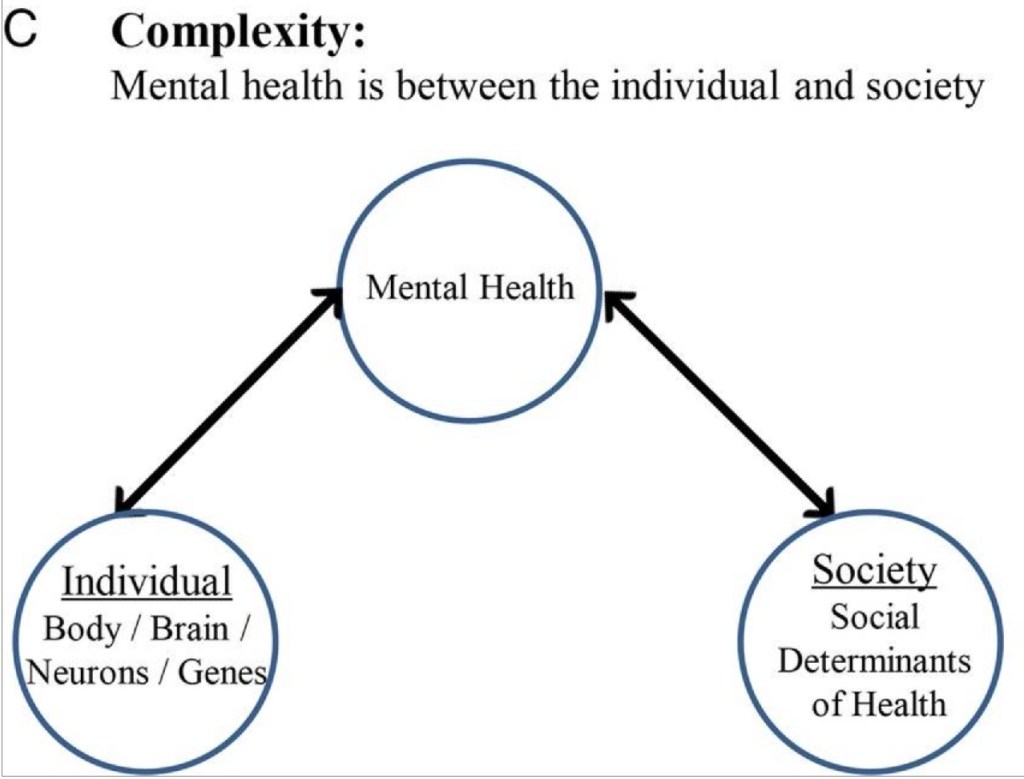
Some research indicates that around 76% of people experiencing homelessness also have a psychiatric disorder, though the association is complex and likely goes in both directions: Some people have a psychiatric condition that contributes to poverty and then homelessness (e.g., losing a job); others become homeless and then develop a psychiatric condition due to the challenges of not knowing where you will sleep at night.

I continue to learn the complexities of working at the intersections of poverty and mental health. I am grateful that more people are interested in this work, too. I hope that things don’t have to get worse before we can offer better help and care to these individuals, who are ultimately our neighbors.