Categories
Homelessness Nonfiction Policy Public health psychiatry Seattle

Shelter “Isolation” and “Quarantine”.

Though the room layout follows pandemic guidance, it still feels crowded.

Dozens of beds are placed six feet apart. In a homeless shelter, each twin mattress is multipurpose furniture: Yes, it is a bed where people sleep. It is also a table upon which they eat simple meals stuffed into brown paper bags. It is a living space of 38 by 75 inches that offers no privacy and no isolation.

Say someone living in the shelter falls ill with Covid. Should this person be allowed to stay in the shelter, but risk infecting others? Or should the shelter ask this person to leave and recover in the chill and darkness of January?

Seattle-King County has been a leader in implementing isolation and quarantine (I&Q) sites for people who don’t have their own place to live. These are hotels that allow people who were exposed to or infected with Covid-19 to rest and recover away from others. The hotels have specialty staff who provide physical and behavioral health care. Once recovered, people can return to shelter or similar congregate settings. It is difficult to prove the success of prevention, though removing people from congregate settings likely reduced infections. This, in turn, reduced hospitalizations and deaths.

Last winter, there were four I&Q sites. This winter, there are only two.

This reduction isn’t for lack of need. As with the general population, the omicron variant has caused a crush of infections in shelters. The I&Q sites, like most health care agencies, cannot hire enough people to provide services. This reduction in I&Q sites is entirely due to an insufficient number of staff.

Because fewer health care workers now work at the I&Q sites, the county has had to enact more exclusion criteria to preserve this service. Providing support for people with multiple health conditions requires professionals with expertise and experience; physical space and supplies are not the only considerations.

This means that people living in shelters who are ill with Covid will be denied admission to I&Q sites.

That means that people who are sick with Covid may only have bad options to choose from. If they’re lucky, they may be able to stay in a shelter. However, their living space of 38 by 75 inches has no walls. Sights, sounds, and air are all shared.

The average age of someone experiencing homelessness for the first time is now 50 years old. People who live in shelters, cars, or outside are more likely to have chronic health conditions like high blood pressure, diabetes, depression, and anxiety. These conditions are risk factors can result in more severe cases of Covid illness. These same factors also increase the risk of disease and death if people are sent outside.

With the attrition of health care and essential workers, the burden of illness and disease will fall upon the most vulnerable people in our communities.

This also means that staff who are still able and willing to work at the shelters–all essential workers–are at increased risk. Most shelters do not have access to medical expertise or consultation. If there is nowhere to send people who are ill with Covid, shelter workers will have to decide what to do if someone in the shelter gets sick. We cannot expect all shelter staff to have the skills, knowledge, and desire to provide isolation and quarantine support. If shelter workers send someone out, that will only put more burden on the safety net of first responders and emergency departments. This safety net is already fraying and breaking after two years of crisis.

Systems cannot rely on single individuals, though this has been happening more and more as the pandemic has dragged on. As various systems falter and crumble, we see the demoralization and exhaustion of all who provide essential services. More distressing are the detrimental effects these system failures have on vulnerable people we want to serve well, but cannot.

This is unfair to all involved. Inside and outside of the crowded room of the shelter, it is with horror that we realize that all of our options are bad.

Categories
COVID-19 Homelessness Nonfiction Public health psychiatry Seattle Systems

Faltering and Failing.

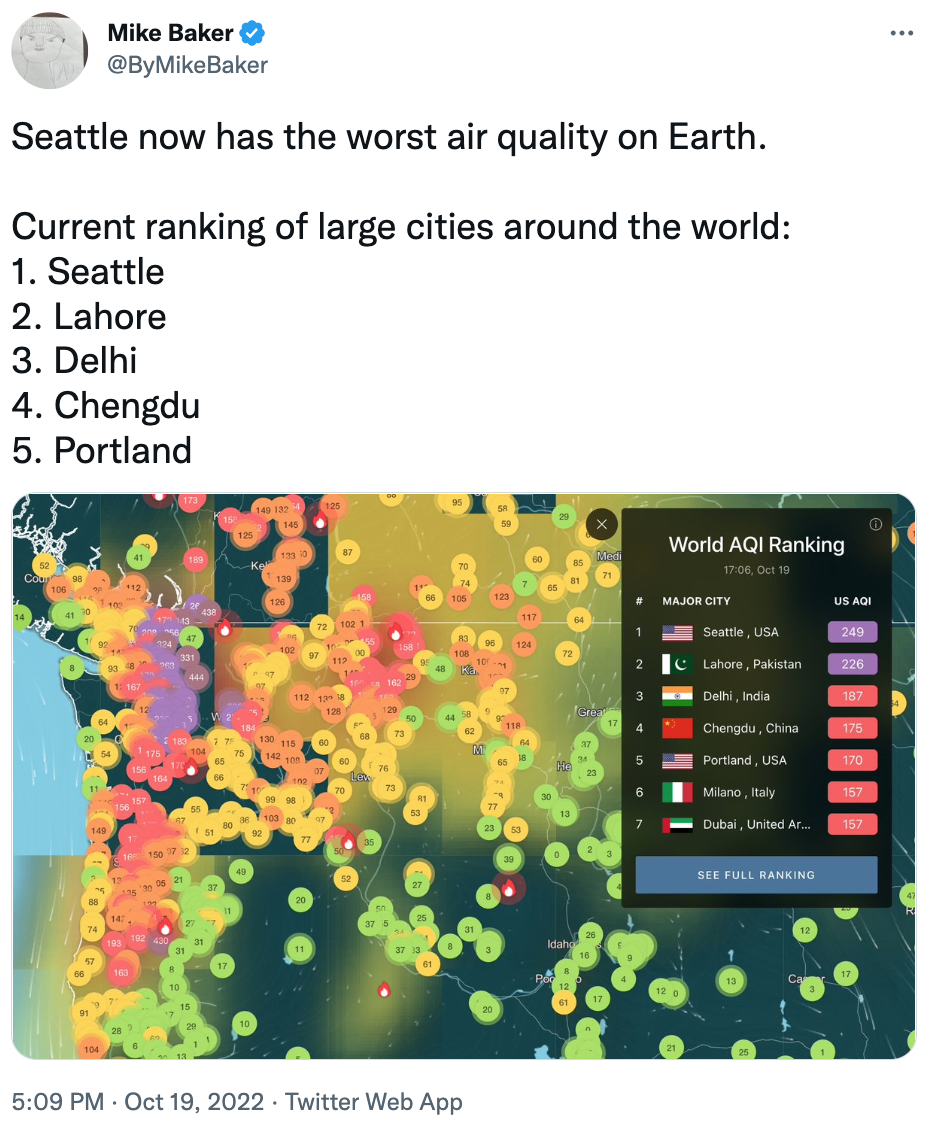
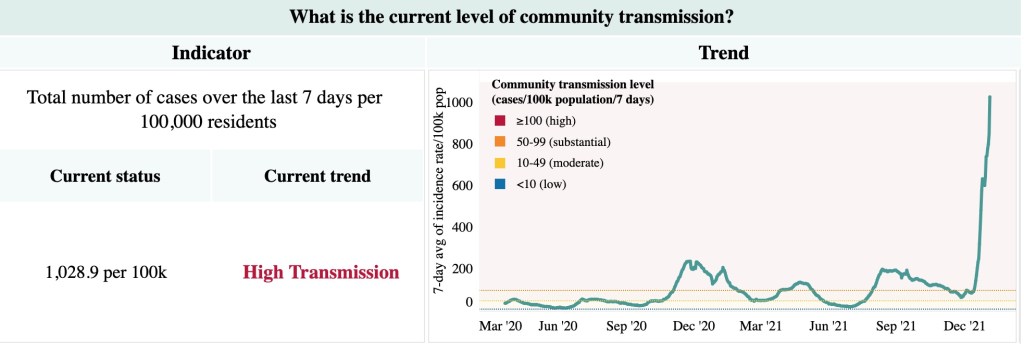
The omicron variant has resulted in a surge of cases here in Seattle-King County:

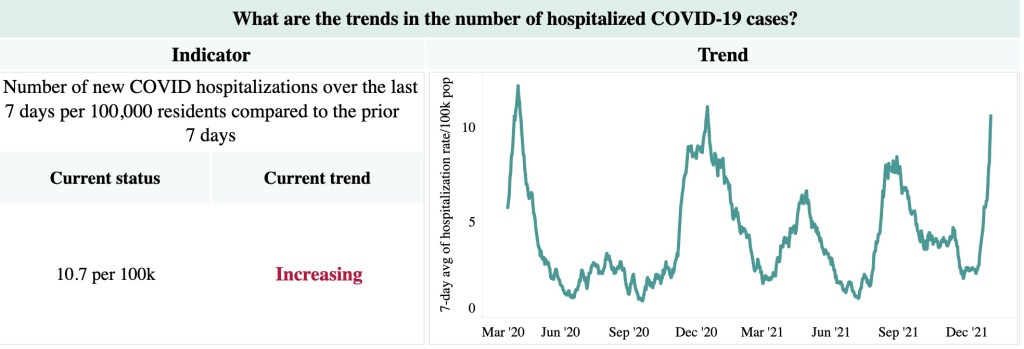
Our hospitals have not been spared. They, like in other areas, are in a crisis situation:

There are similar surges in Covid cases in homeless shelters and other congregate settings. This, combined with an insufficient number of people who are willing and able to work at isolation and quarantine (I&Q) sites, has led the I&Q sites to limit the number of admissions. The admission criteria now are the most stringent they have been at any point during the pandemic:

What this means in practice is that people living in shelters who are sick with Covid may have nowhere else to go. If they are lucky, they will be able to stay in the shelter. Their only other option may be staying outside in the chill and darkness of January.

Which is worse? Covid infections sweeping through a homeless shelter? Or people exiled outside because they are sick? (They may end up seeking help at an emergency department, all of which are already strained and overburdened.)

To be clear, I do not blame the county for this. Health care workers are fleeing their jobs due to the crush of the pandemic. Everyone is struggling with hiring health care and essential workers.

We cannot look away from the horror of systems faltering and failing. We must witness that the most vulnerable people in our community will bear the greatest brunt of these failures.

Categories
COVID-19 Homelessness Medicine Seattle

Surge.

When I was younger, my intention was to become an infectious disease doctor. Forces, seen and unseen, pulled me into psychiatry.

My undergraduate studies were in microbiology, virology, and immunology. Had someone told me twenty years ago that I would someday use that knowledge on a daily basis, I would have shrugged and said, “Well, that makes sense. That’s the plan, right?”

Had someone told me ten years ago that I would use knowledge from my undergraduate studies during a pandemic, I would have snorted: “But now I work as a psychiatrist. And a pandemic? What are you talking about?”

Had someone told me two years ago that I, as a psychiatrist, would be leading a public health response for a homelessness services agency during a global pandemic, I would have furrowed my brow: “What are you talking about?”

And here we are.

We’ve never had so many people—staff and patients—test positive for Covid at one time during the pandemic as we have in the past three days. Thankfully, most have had only mild symptoms and none, thus far, have needed hospital-level care.

The work we’re doing for Covid isn’t as intense or heartbreaking as the work my colleagues are doing in emergency departments and hospitals. Never before had I thought that a homelessness services agency could play a vital role in prevention and early intervention.

And here we are.

Throughout the pandemic, our team has framed our efforts as one way to keep people out of emergency departments and hospitals. These could be our humble contribution to our colleagues working in inpatient settings. We have been largely successful, though I worry that our luck is running out.

We continue to witness the indirect effects of the pandemic. Some have been lethal: Suicides and overdoses, whether intentional or not. Some are worrisome: More irritability and increasing intolerance for the challenges and annoyances of life, regardless of one’s station. I wince when I consider what might come next as we witness this surge of cases.

God have mercy on us all.

Categories
COVID-19 Nonfiction Public health psychiatry Seattle

God Help Us All.

It’s like watching something happen in slow motion, but there is somehow not enough time to stop what is happening.

I don’t know either emergency department medical director well, though we are friendly enough to send greetings a few times a year. We all already knew that hospitals across the state are over capacity. One wrote about the “brutal impacts” across the state due to the additional number of patients. And this precedes the anticipated “all time highs for Covid in about two weeks”. The other, more economical with his words, noted that his team is “maintaining”, but “that the recent surge is further stressing the teams”, adding to “moral injury”.

A friend who works for a third hospital system shared with me that an emergency department had to close down because there weren’t enough staff to operate the place. This emergency department is in a suburb, not a rural town.

It’s not just emergency departments. My colleagues in primary care are reporting that they have had more people under their care die in the past year. They’re not dying from Covid. They’re dying from chronic medical problems.

I myself have never had so many people under my care die in such a short amount of time. They, too, did not die from Covid. Instead, they died from suicide, overdoses, and chronic medical problems.

Like others, I’m watching the number of Covid cases soar. There was a time when daily deaths from Covid were only a few dozen. Now we’re somehow back in the hundreds.

During the late winter, when thousands of people were dying each day in the US from Covid, the grief would overcome me without warning. These days, I feel the mass of dread growing in my body. My chest caves in from the misshapen weight; my jaws are tight, as if they are holding back anguish that transcends words.

God help us all.

Categories
COVID-19 Education Reflection Seattle

On Pushing Vaccines.

This summer is like last summer: We (a homelessness and housing agency) have had very few Covid cases in the past month or so. If this year is like last year, our reprieve will end in mid-autumn.

With this lull, I received recommendations to send out information about the current state of the pandemic as it relates to our agency. I hemmed and hawed before writing the crappy first draft: Everyone is tired and no one wants to read another e-mail. In this draft I waffled about commentary about vaccinations.

While vaccination rates in the Seattle-King County area are around 70% (and thus higher than other parts of the country), this doesn’t mean that everyone has been eager to receive a vaccine. There are people who have made a firm decision to forever decline it. There are also people who remain unsure.

I have felt disappointed and weary upon hearing the disdain of leaders and experts towards people who have not gotten vaccinated. I understand their frustration: No one wants to see people get sick and die. There are many ways to die and dying from Covid-19 is an undesirable way to leave this world.

That being said, scolding or berating people to make a specific choice is rarely (if ever) effective. If someone tells you that you are selfish because you won’t eat vegetables, that probably won’t increase the chances that you will eat vegetables. You might instead avoid this specific someone: Who wants to hear that they are a selfish person? (You can replace eating vegetables with any other behavior, identity, or choice: You are a selfish person because you choose to believe in liberal political ideas. You are a selfish person because you think abortion is wrong. You are a selfish person because you want to defund the police. You are a selfish person because you believe that Jesus was crucified for your sins. Calling someone selfish rarely promotes inquiry or conversation.)

People have shared with me a wide variety of reasons as to why they don’t want to get vaccinated. Some of those same people end up getting vaccinated… maybe because of our conversation, maybe not. I suspect that most didn’t even share all of their reasons with me because they might have felt embarrassment if they did.

If someone is willing to talk with you about a choice they want to make, that also means that they are talking with themselves about that very choice. Any conversation you have with them may carry on in your absence.

I don’t know if this is actually an adage in psychiatry, though I recall several people sharing this while I was in training: As long as someone is alive, there is still hope. Things can still change. People want to make their own choices, though; no one likes coercion. People aren’t stupid, either: They often know when someone is using force to try to change their minds or behaviors. (This use of force doesn’t have to be dramatic either: It can be a simple statement like, “I need loyalty.“)

As long as someone is still alive, there is still hope, and we can use that hope to keep the conversation going. People will share their worries with you if they are willing to give you the chance to change their minds. They will only give you that chance if they have some trust in you. They will have some trust in you if you have genuine interest in their worries and beliefs. People want to be understood. People want dignity.

You may fear that there isn’t enough time: What if they get infected with Covid-19 tomorrow and die next week? Maybe if we put more pressure on people, they will move faster.

Alternatively, if we put undue pressure on people, they may choose to never speak to us again. Any time that we did have is now completely gone. You can play the long game or you can prematurely end the game.

To be clear, I’m not saying any of this is easy or that a select few of us have magical abilities and endless patience to help people change their minds. I do, however, have experience working with people who were not making choices that I wish they would make: People who were living outside and refused to move into housing due to beliefs that were not rooted in reality. People who were using drugs and alcohol for many years. People who declined to take medication even though literally everyone else witnessed their improved health, wellbeing, and function when they did so.

Sighing and making exasperated comments at people who are living outside rarely makes them move into housing faster. Yelling at people who are using drugs and alcohol almost never makes them stop using. Forcing people to take medications does not make medications suddenly more appealing to people who usually refuse them.

Am I fully vaccinated? Yes. Do I wish more people would accept the Covid vaccines? Yes. Do I think threats or domination, even in slight forms, will succeed? No. At this point, efficiency no longer seems effective.