A photo of yours truly wearing a mask. Photo credit to Amy L.
There were two patients in the hospital room. Both were elderly East Asian males, each reclining in his bed. The curtain that divided the room in half was pulled forward, offering the illusion of privacy. Sound still travels through cloth.
Outside the hospital room I rubbed sanitizer onto my hands. The only size of blue plastic gowns offered was extra-large. My arms swam through the enormous sleeves as I pulled the gown over my yellow sweatshirt. The only gloves available were size large, which I slid onto my hands before putting goggles on my face. I was already wearing an N95 mask. Only my black track pants and black sneakers emerged from my blue contact precautions.
My dad had alerted me that, overnight, he was moved from a private isolation room into a shared room. His roommate, though ethnically Chinese, spent much of his life in a different country in Asia. He spoke limited English. They quickly discerned that they both speak Chinese.
Within a few minutes, I pushed the curtain back so the divided room became whole. Chinese conversation flowed among the three of us, punctuated by occasional wet coughs rattling through the torsos of the two men.
If I looked right, I could see through the window in the door. Sometimes staff walked by, paused, and waved. One was a man in his fifties who, at one point, opened the door and said to me, “We’re thinking we might discharge him today.” He gave me a thumbs up sign and shut the door before I could respond. He wasn’t my father’s doctor.
Later, my father’s nurse walked in and asked who I was. “Oh,” she commented, “I thought you were the interpreter.”
The other man’s nurse walked in minutes after that and asked who I was. “Oh,” she said, “I thought you were a physical therapist.”
Later, in the hallway, the man who appeared to be in his fifties waved me down. He was wearing a long white coat and there was a red label on his ID badge that said “Doctor”. His eyes smiled at me as he asked, “How is your dad doing?”
I paused before asking, “May I ask who you think my dad is?”
“Mr. Other Guy,” he said effortlessly.
“That’s not my dad.”
“Oh?”
“The other Asian man is my dad.”
“Oh.” He was anchored in awkwardness.
“Thanks for taking care of Mr. Other Guy,” I said before walking away, releasing the anchor. He waited a beat before veering off in the other direction.
This TikTok video provides an accurate (and shouty) summary of the National Guard member who leaked classified military documents. In short, it appears that the Airman shared these documents in an effort to elevate his status within an online cohort. (Someone on the internet opined something like, “This was a cosmic level of stepping on a rake that hits you in the face.” Correct.)
We all have engaged in behaviors to heighten our position in relation to others. Depending on who you ask, some argue that we are constantly adjusting our behaviors to communicate and maximize our status.
Our perception of our own status is not always accurate. It seems that we sometimes exert tremendous effort to demonstrate high status to make ourselves feel better, rather than to assert that we have higher rank than others. (Much research has been done to show how humans assess and react to status.)
Maybe it’s a stretch to link demoralization and status to each other, though this is what has come to my mind over the past few weeks. Demoralization is usually framed as an individual process, whereas status involves groups of people.
Merriam-Webster provides the following definitions:
demoralization: weakened morale; to be discouraged or dispirited
I’ve written about demoralization before, though it was more in reference to individuals experiencing medical illness. The paper I reference in that post offers this definition of demoralization:
the “various degrees of helplessness, hopelessness, confusion, and subjective incompetence” that people feel when sensing that they are failing their own or others’ expectations for coping with life’s adversities. Rather than coping, they struggle to survive.
This is where I might be speaking out of turn: Is it fair to apply principles usually applied to a single person, particularly one’s intrapsychic processes, to groups of people? (Would I be a true psychiatrist if I didn’t use the word “intrapsychic“?)
But let’s consider this together. I’m starting with the Airman, but that isn’t actually the point of this post.
What if that Airman was feeling demoralized? Within his Discord group, he may have been able to rely on his age to maintain high status. What teenager doesn’t think a 21 year-old person is cool? But what if group dynamics shifted and, suddenly, the Airman was no longer the proverbial “alpha”, but had been demoted to a “beta”?
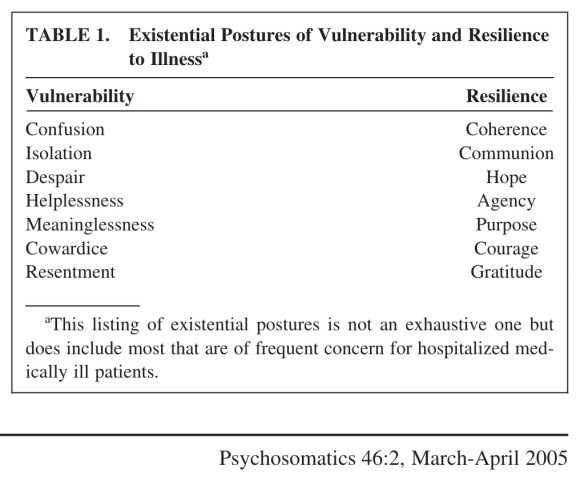
In an effort to restore his status, he might have employed any one of the strategies to reduce his vulnerability:
The sharing of classified military documents isn’t a demonstration of resilience, but it is a display of power that produces postures of coherence, agency, and courage. In sharing classified papers that only he has access to, he is dissolving any confusion he or anyone else may have about his “rightful” status. To combat feelings of helplessness, he demonstrated agency to provide evidence of his power. It takes some flavor of courage (…) to share sensitive information. By sharing these documents with his Discord cohort, he facilitated communion, established a purpose for himself, and got to bask in the gratitude of his friends. What a way to escape the isolation that accompanies a degradation of status!
Again, is it fair to apply individual, intrapsychic processes to groups of people, particularly groups of people in politics? (But aren’t political groups comprised of individual people?)
The passage of laws—something that feels real and concrete—brings coherence and fosters communion! It brings hope and purpose! Doing something—exhibiting agency—summons courage and generates gratitude! Your rank in relation to others feels like it is rising. Even though there are people who will view your actions as further erosion of your status, it doesn’t matter: You feel better. You feel more power.
The passage of laws reduces confusion, despair, and helplessness. Instead of feeling isolated, people can channel their feelings of helplessness and resentment into doing something, which makes cowardice evaporate. You may already possess high status—all the other people around you may already defer to you because they view themselves as having lower status. And, yet, if you feel demoralized, the positive regard from others may be insufficient to elevate your own status in your own eyes.
The Tacoma News Tribune graciously agreed to publish an opinion piece an esteemed fellow psychiatrist and I wrote. I invite you to read the 500-word essay, Crisis care centers are important. But WA needs more to fill behavioral health gaps, directly through the newspaper (and show a local newspaper some appreciation through page views!). The piece has particular relevance to residents in King County in Washington State.
If you have more time and would like to read the original version, you can find it below. Thanks for your interest.
King County voters will decide whether to fund a network of crisis care centers in April. There are many reasons to support this: We all know people who have experienced behavioral health crises, including kids in school; colleagues at work; family members; and people we encounter in the community.
Because King County currently has only one crisis center, additional centers will help. However, the entire behavioral health system in Washington is in crisis. A narrow focus on these centers only may lead to even more people tumbling into crisis.
King County has explained that these five crisis centers will “provide a safe place… specifically designed, equipped and staffed for behavioral health urgent care. These Centers will provide immediate mental health and substance use treatment and promote long-term recovery.”
If crisis centers have the most resources, they will be the most robust and responsive element of the system. Outpatient clinics providing earlier intervention and prevention services are often understaffed and have waitlists. People already enrolled in these clinics may wait weeks to months for follow-up appointments. Those leaving hospitals also compete for clinic appointments. This excessive waiting can precipitate crises. People should not have to be in crisis to access care.
Crisis care centers are designed to accept anyone, with or without insurance. Many behavioral health clinics have insurance restrictions. Some clinics don’t accept public insurances like Medicaid or Medicare. Others do, though have limited funds to provide services for uninsured people or for those ineligible to obtain insurance. Such restrictions will funnel uninsured people to the crisis centers. Yet, where will they go for ongoing care?
Due to limited resources, crisis care centers must screen and triage referrals. If people experiencing symptoms related to mental illness or substance use don’t meet criteria for admission to a crisis center or a hospital, what then? If under-resourced outpatient clinics remain understaffed or close, these individuals will be forced to wait for treatment. Their symptoms may worsen, precipitating preventable crises, which no one wants.
The option for people to stay up to 14 days in a crisis care center can help people connect to ongoing services. However, many agencies are unable to see people and establish care within 14 days, in part due to what King County described as: “The behavioral health workforce is strained under the magnitude of the need, all while being underpaid, overworked, and stretched too thin.”
The levy touts the use of peer counselors in crisis centers. Peers with lived experience are valuable, though should not be the primary providers of care. Peer counselors often have the lowest wages and, in some for-profit models, make up the bulk of personnel, presumably to maximize revenue. Some people in crisis are among the most vulnerable, ill, and complex patients in the region. Both patients and staff across the entire continuum of care deserve sufficient support and resources to get, and stay, out of crisis. If people experiencing mental health crises receive insufficient services, they are more likely to fall back into crisis and return to these centers. If these crisis centers are operated by for-profit organizations, readmissions will increase their revenue. We have already witnessed this pattern in several for-profit psychiatric hospitals where patients experienced harm. Patients and their families deserve better.
King County needs crisis centers, but personnel in other parts of the system also need support. The levy notes that funding for residential treatment facilities will focus on capital and maintenance. Building conditions are important, though the staff who work in these buildings are just as valuable. Many individuals receive ongoing care in residential treatment facilities following acute hospital treatment. Supporting and retaining staff in these residential programs are vital in reducing behavioral health crises.
Outpatient clinics with robust funding for personnel, technology, and other resources, along with appropriate reimbursement of services—things that never happened after the original deinstitutionalization movement of the 1960s—will help people access care. This, along with preventative efforts and early intervention at the first signs of behavioral health challenges, decreases crises.
Ultimately, supporting peoples’ basic needs will reduce the need for crisis centers. Living wages, affordable housing, access to food, universal health care coverage, employment opportunities, education and training, and building social connections, will reduce psychological burdens and promote wellness.
This levy should be viewed as an initial investment in improving our battered behavioral health care system. More needs to be done to improve the mental health of our friends, family, and neighbors.
I gave the presentation earlier this week and ended up presenting (a) homelessnessdata specific to Seattle-King County, (b) general data in in published research about rates of different psychiatric conditions in people experiencing homelessness (there’s actually not a lot of data about this; my understanding is that there is a national study underway right now to assess people experiencing homelessness through structured psychiatric interviews), and (c) the topic of “Involuntarily Removing Mentally Ill People from Streets“. I asked the group—students within various health professions schools—for their thoughts about New York City’s plan.
Many of the students were unfamiliar with involuntary detention for psychiatric reasons, along with the process for how that happens (the laws in Washington State differ from those in most other states in the nation; namely, physicians and other mental health professionals in Washington State cannot detain people directly; we must call a third party, called Designated Crisis Responders, and refer someone for detention). The initial group consensus favored civil liberties; they spoke of loss of dignity, the psychological and physical trauma that can result from involuntary detention, and the importance of autonomy.
When the scenario was adjusted so that the person who was experiencing homelessness and major psychiatric symptoms was someone that the students knew and loved, they quickly changed their arguments to support involuntary detention. When we love someone, we are more comfortable taking away their rights.
Like many complex issues, “right” answers escape us as more facets of the problem are illuminated. Involuntary detention itself is a complicated issue and, because most people are not experiencing homelessness, the majority of people who are detained are people who have an indoor place they call home.
Some research indicates that around 76% of people experiencing homelessness also have a psychiatric disorder, though the association is complex and likely goes in both directions: Some people have a psychiatric condition that contributes to poverty and then homelessness (e.g., losing a job); others become homeless and then develop a psychiatric condition due to the challenges of not knowing where you will sleep at night.
I continue to learn the complexities of working at the intersections of poverty and mental health. I am grateful that more people are interested in this work, too. I hope that things don’t have to get worse before we can offer better help and care to these individuals, who are ultimately our neighbors.
Items related to systems of health care that I learned and thought about this week:
National Medical Association. I am embarrassed to confess that, nearly 20 years after graduating from medical school, I learned only this week about the National Medical Association. This came about while I was learning some of the history of the American Medical Association (AMA). In short, the National Medical Association was created because the AMA would not admit Black physicians into the organization. (I have never been a member of the AMA. My reasons have been squishy; I never truly believed that the AMA represented me or my interests. That hasn’t stopped the AMA from sending me invitations in the mail to join! It seems that over 80% of physicians are not AMA members, so I’m certainly not alone.)
Alexander Graham Bell and Eugenics. This Journal of the American Medical Association(emphasis mine) editorial from 1908 reports:
The subject of the production of better men and women was brought before the American Breeders’ Association by Professor Alexander Graham Bell, the inventor of the telephone, who for many years has been interested in certain social questions, especially those relating to the condition of the deaf and the result on the next generation of the consanguinity of parents as regards the production of deaf and blind children.
No one ever brought this up when we learned that he invented the telephone.
It appears that Bell’s interest in “breeding” was his observation, though the collection of some statistics, that parents who are related to each other seem more likely to bear children who are deaf. Bell made “an appeal for the collection of statistics by trained men who are interested and who have the opportunity to secure the definite detailed information” related to “the production of better children”. The unnamed author(s) of the editorial go on:
We are securing survivals to a much greater degree than before, and now it becomes a duty to secure, so far as it is possible, the origin of members of the race who will be worthy of survival. After all, the most important problem in evolution is not so much the survival of the fittest as the origin of the fittest.
Over 100 years have passed and this ugly question of “breeding” persists.
The Chinese Exclusion Act. I’ve commented on this Act before (here and here), but here’s an opportunity to pile on the AMA even more. In 1901, the Journal of the American Medical Association published a “minor comment” about “The Exclusion of the Chinese“, which you can view in its entirety in the link above.
Reading this made me think of vile rhetoric that has revived during this Covid-19 pandemic. Recall recent references to “disregard of sanitation” due to “[maintainence] to the fullest extent their oriental habits and traditions”. The Chinese, they just won’t do as we do.
“That this is a Christian country and we regard them as heathen, should not make us altruistic to our harm.”
Prescriptive Authority for Psychologists. There is a House bill in the Washington State Legislature that will give prescriptive authority to psychologists. Five US states currently allow psychologists to prescribe medications.
While it is easy to stumble into a debate about whether this should happen or not, I think this is a distraction. This debate is a manifestation of failure in public health policy.
Instead of trying to increase the number of people who can perform a highly specialized task, why not increase the availability of community supports and services so people don’t need highly specialized treatment?
Consider the decrease in anxiety and depression that would result if people were confident they could pay their rent? feed their families? take time off to care for their newborn? secure an education or training–whether college or vocational school–that supports stable employment?
Think of the decrease in stress and trauma if people had better options than to sell drugs or sex? if neighborhoods had more green spaces and less air and noise pollution? if they had adequate and essential protections as “essential” workers?
Medical Mistrust and Meeting People Where They Are At. This paper about medical mistrust, racism, and health prevention describes an elegant way to recruit study participants: “collection of data [occurred] primarily in barbershops, venues with documented recent success in reducing blood pressure in African-American men”. It is elegant because it is simple, effective, and successful.
When I read this, I recalled a suggestion my father had around the time the Covid-19 vaccines were released. He lives near several Asian grocers, many of which are more like bodegas than grocery stores.
“Why don’t they set up vaccination stations outside these grocery stores? Everyone needs to eat. Elderly people go to these stores all the time. Laborers get snacks and cigarettes. Make it easy for people.”
Sometimes (often?) the best and most effective health care happens outside of medical spaces.